How Much Is Your CS2 Skin Really Worth? A Complete Value Breakdown

When a player asks, “How much is my skin actually worth?”, they almost always look only at the marketplace price. In reality, the base value of a skin in Counter-Strike 2 is shaped by several different factors. If you understand how these work, you can value your inventory much more accurately, spot undervalued items, and avoid selling rare skins for next to nothing.
What Determines the Base Value of a CS2 Skin?
Skin Type and Weapon Popularity

The type of weapon is one of the strongest factors affecting a skin’s base price.
Traditionally, the most in-demand skins are tied to weapons that are used in almost every match:
- AK-47 — the absolute king of the market. Even average-quality skins often cost noticeably more than similar skins for other rifles.
- M4A4 and M4A1-S — timeless classics on the CT side.
- AWP — skins for this rifle are almost always liquid and easy to sell.
- USP-S, Glock-18, Desert Eagle — pistols that show up in the game in nearly every round.
On the other hand, low-popularity weapons — shotguns, some SMGs, and niche rifles — almost always drag prices down. Even a great-looking design won’t save a skin if the weapon itself rarely appears in real matches.
We’ve covered the strongest weapons in detail in a separate guide: TOP-10 Best Ranked Weapons in CS2.
Weapon relevance in the current meta also plays a big role. Any balance changes, economic tweaks, or shifts in game pace directly affect demand. If a weapon becomes stronger or starts being used more often, its skins can rise in price very quickly. And when the opposite happens, prices usually fall just as fast.
Collection and Case Origin

A skin’s origin is basically its price history. Two skins with the same rarity can cost very different amounts depending on which case or collection they came from.
Skins from old or limited collections are almost always valued higher than items from active cases. A good example is the Cobblestone Collection, which includes one of the most famous AWP skins — Dragon Lore. Items from this collection are significantly more expensive because the map was removed from the active map pool long ago, and the collection itself only dropped for a limited time.
The market also pays close attention to cases that are no longer dropping. Skins from discontinued cases — such as older Operation cases or the first Chroma cases — tend to gain extra value over time simply because no new items are entering the market anymore.
Operation-exclusive skins push this effect even further. Items from operations like Hydra, Broken Fang, or Riptide originally entered the game in much smaller quantities. As a result, these skins are often seen as rarer and more “stable” in terms of long-term value.
That’s why, when evaluating a skin, it’s important to look beyond just appearance and rarity. The source of the drop matters a lot.
Rarity Tier
Rarity sets the starting price floor and defines a skin’s minimum market value. Every skin in Counter-Strike 2 has a specific rarity tier:
- Consumer Grade (white) — the most common tier; these skins are usually worth almost nothing.
- Industrial Grade (light blue) — slightly rarer, but still generally inexpensive.
- Mil-Spec (blue) — a more interesting tier; these skins often drop from cases.
- Restricted (purple) — rare items that can already be worth noticeable money.
- Classified (pink) — even higher rarity, where prices start to climb much faster.
- Covert (red) — one of the rarest tiers, especially valuable for AWP skins and knives.
- Contraband — a special rarity used only for the M4A4 “Howl” skin.
The higher the rarity, the lower the drop chance and the higher the base price. However, rarity alone doesn’t guarantee a high value. It only works in combination with other factors — weapon popularity, origin, and visual appeal.
Knives and gloves sit in a separate market category. Their high prices are driven by extremely low drop chances. A knife skin is the item itself, not just a cosmetic for an existing weapon.
By the way, knives are usually very expensive, but we’ve put together a list that can help you avoid overspending and find more affordable options: Top 8 Cheapest Knives in CS2. It’s also possible to earn a knife through crafting — we explain how it works in Knife Crafting in CS2.
How Float Value and Wear Condition Impact Price

If origin and rarity build the price foundation, then wear and condition are the factors that can turn a regular item into an expensive one — or sharply cut its value.
Understanding Float Value
Wear is a numerical value from 0.00 to 1.00 that shows how worn a specific skin instance is. This value never changes, no matter how long you use the skin or how many stickers you apply. The number assigned at the moment of drop stays with the skin forever.
The lower the wear value:
- the better the overall condition, cleaner and sharper textures
- the higher the potential price
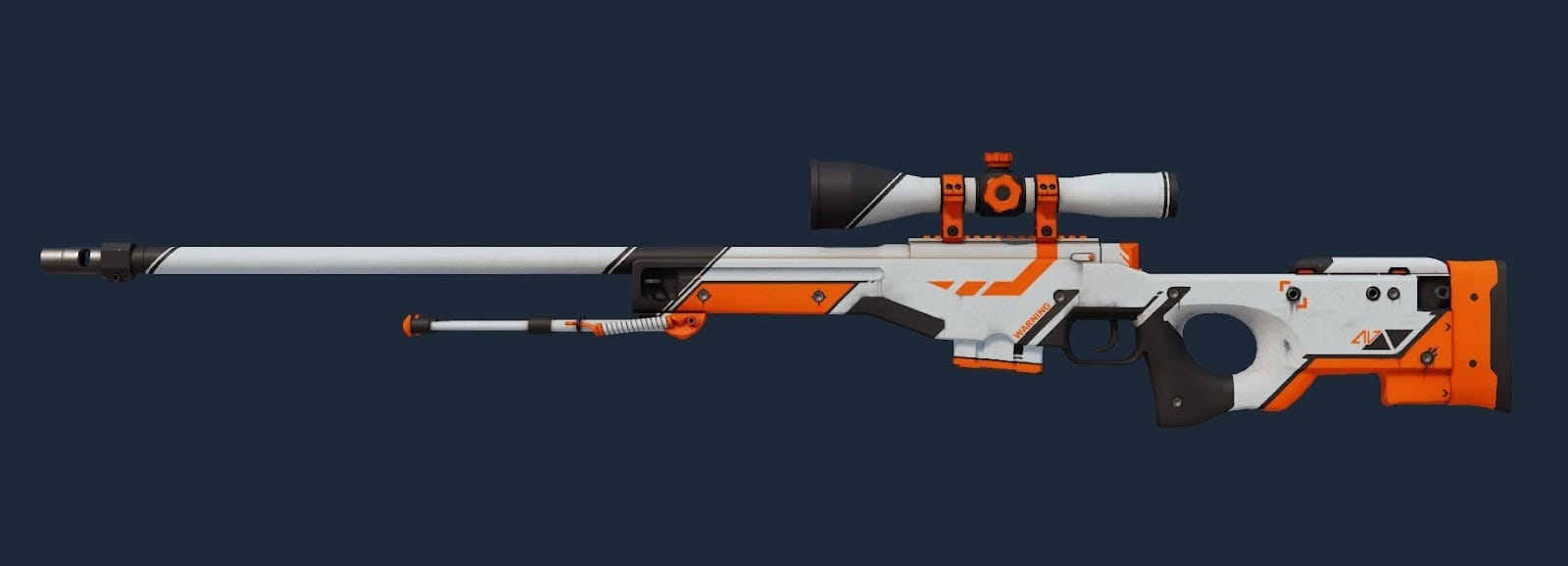
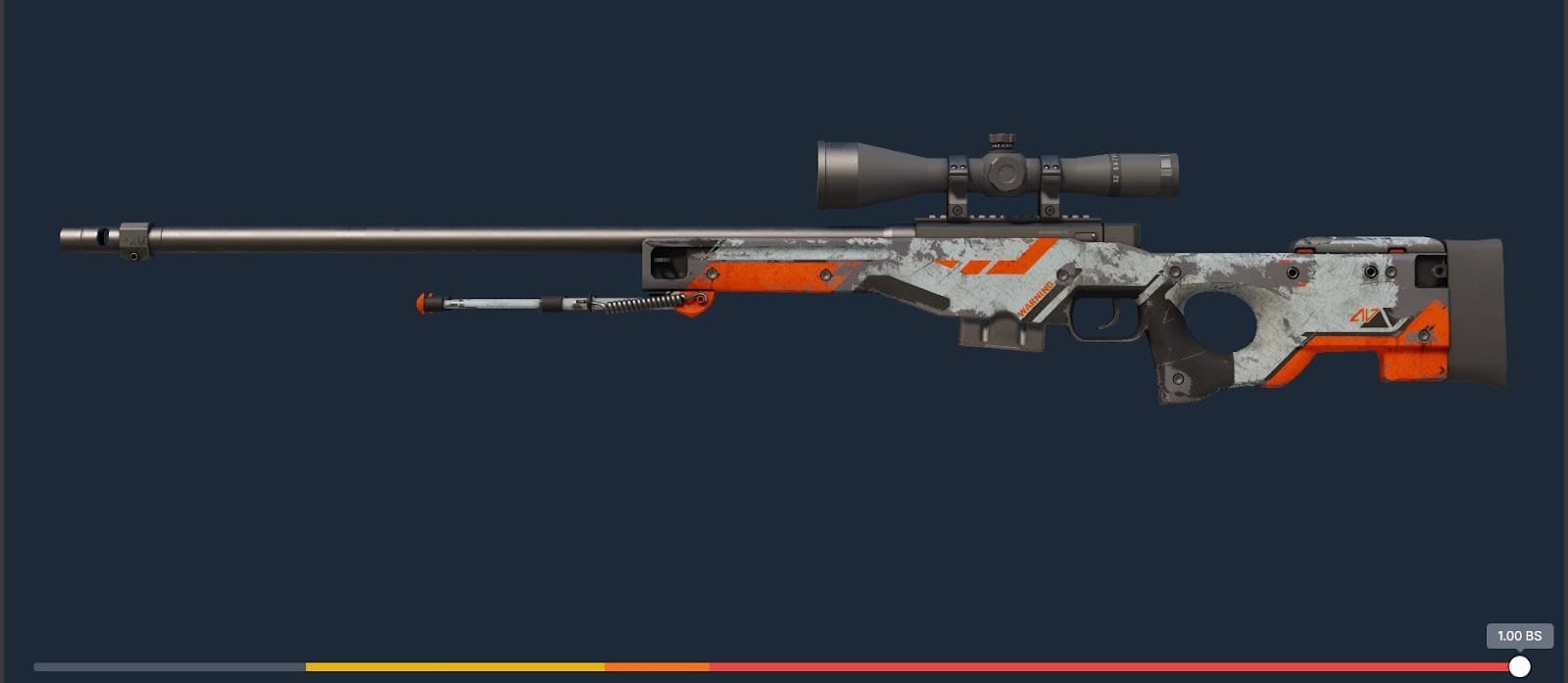
This is easy to see with AWP | Asiimov. A float around 0.18 looks clean and well-preserved.
The higher the wear value:
- the more visible scratches and damage
- the lower the base market price (with rare exceptions)
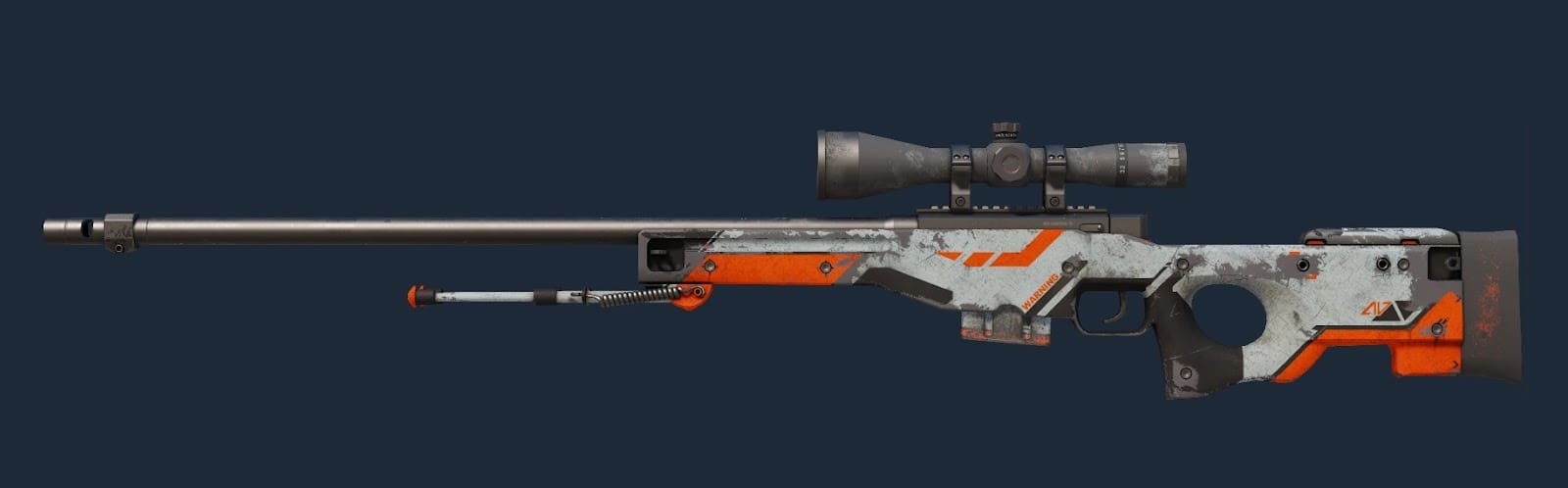
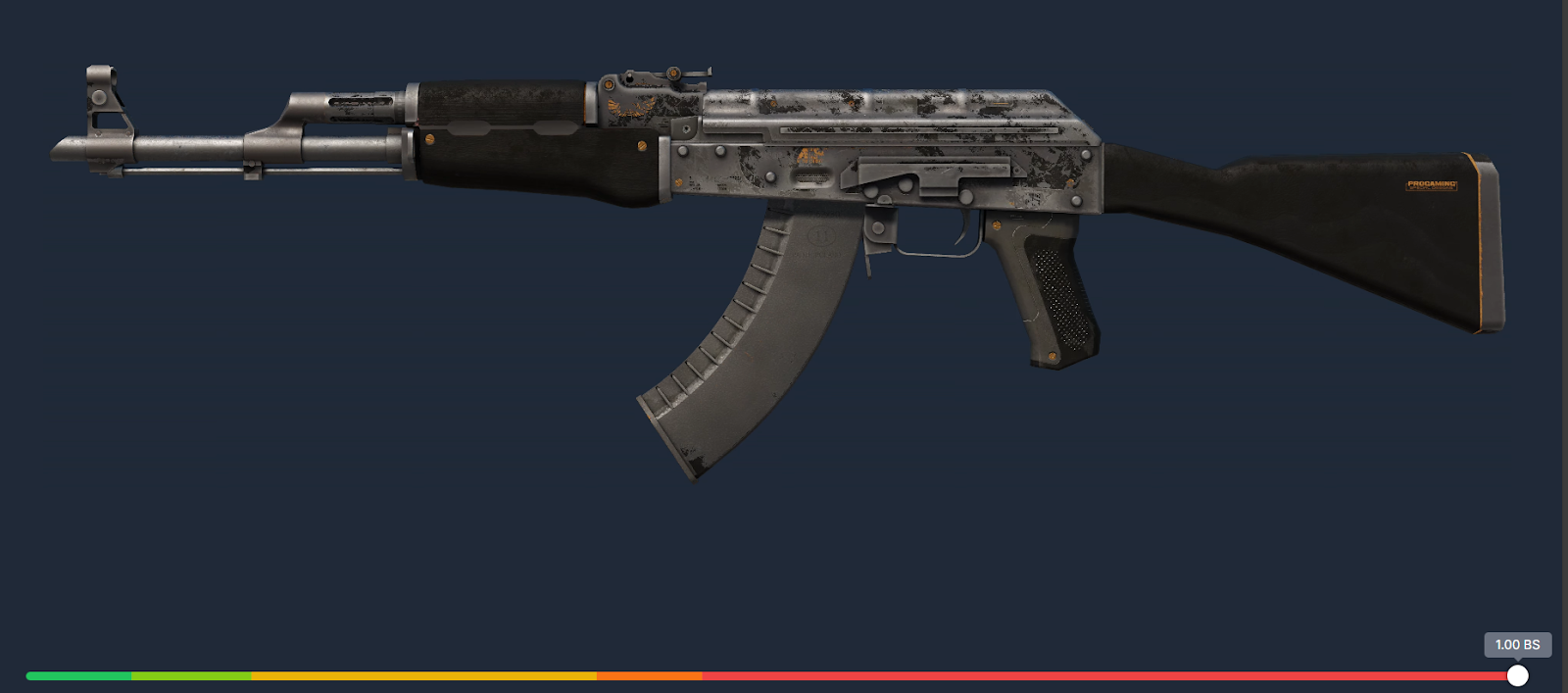
For example, a float close to 0.9 already shows heavy visual wear.
It’s also important to know that every skin has a fixed wear range. Some skins physically cannot drop with a perfect minimum float if their lower limit is higher. This automatically limits the number of truly “perfect” versions on the market and pushes their value up.
Today, checking wear is easy. You can see it:
- directly in-game when inspecting an item
- on trading platforms
- in analytics sections of specialized websites, where it’s convenient to compare price and condition
For example, on CS.MONEY you can see the float value directly in skin listings. A skin with wear 0.52 will show this number in the top-right corner of the screen.

Wear Categories
The wear value is closely tied to condition categories familiar to every player. The main ones are:
- Factory New — minimal wear, clean look, high liquidity
- Minimal Wear — almost perfect condition, often the best balance between price and visuals
- Field-Tested — noticeable wear, but still popular and playable
- Well-Worn — heavy scratches and clear price drop
- Battle-Scarred — maximum wear, usually the cheapest segment
The market almost always values Factory New and Minimal Wear the highest. These skins are easier to resell and simply look better in matches and streams.
Low Float and High Float Premiums
Even within the same condition tier, wear can strongly affect the price.
One of the clearest examples is AK-47 | Redline. This skin doesn’t exist in Factory New due to wear limits, so Minimal Wear versions with very low float (around 0.10) are seen as the closest thing to “perfect.” These versions consistently sell for more than average ones.

High wear usually lowers the price, but there are exceptions. The most famous case is AWP | Asiimov in Battle-Scarred condition. At extremely high wear (around 0.95+), the skin becomes darker, almost “burnt,” which some players and collectors actually prefer. Such copies can sell for more than typical Battle-Scarred ones, despite worse stats on paper.
Another example is USP-S | Kill Confirmed or AK-47 | Elite Build. With maximum wear, they look rougher and more contrast-heavy, making them visually unique. This is niche demand, but it stays surprisingly stable.
You can test different skins for free on xplay.gg. The platform offers a Skinchanger tool that lets you apply any skins, stickers, and other cosmetics in Counter-Strike 2 at no cost.

Skinchanger works for free for 7 days. You can adjust wear level, add stickers, choose patterns, and play on platform servers using the skin. And if you end up liking it, xplay.gg will show how much that exact version costs on CS.MONEY — you can jump straight to purchase with one click, without digging through dozens of listings.

How Patterns and Special Variants Change Value
Pattern Index and Seed
The pattern index (also called a seed) defines which design elements appear on a specific skin and how exactly they look. Unlike special editions, patterns don’t have official names or phases — their value is driven purely by visuals and community demand.
A great example is AWP | PAW. This skin is filled with dozens of cartoon characters — cats, dogs, paws, faces — and the pattern decides:
- which characters are visible
- where they are placed
- whether key elements appear in the center of the weapon
Most versions look pretty chaotic, without a clear focal point. But there are patterns where:
- large animal faces sit right in the center
- the design looks more symmetrical
- there are no awkward empty or “dead” zones
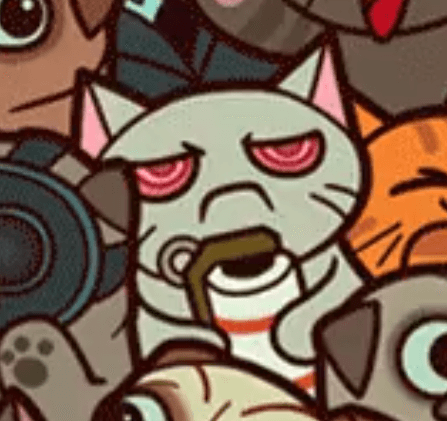
These versions feel much more appealing and usually sell above the average market price. With pattern #420, a red-eyed cat appears in the center of the skin — the community calls it Stoner Cat.
In patterns like #19, #35, #41, #350, and some others, you can clearly see a golden maneki-neko cat. These are commonly referred to as Golden Cat patterns.

Patterns where recognizable elements are clearly visible on the play-side (the side you see while playing) are especially valued. It’s also important to note that there’s no official pattern classification here — all value is created by the market itself: screenshots, resales, and buyer reactions.
Special Variants
There’s a separate category of skins where pattern variations directly multiply the price.
Blue Gem is a term used for Case Hardened skins with a strong dominance of blue color. Such versions can cost tens of times more than regular ones. Everything matters here: how much blue there is, where it’s located, and the overall visual balance.
Pattern #661 is almost fully blue and is known as the “Blue Gem.” These skins can sell for dozens of times more than standard versions.

Fade percentage is the key factor for Fade-series skins. It shows how much of the weapon is covered by the bright gradient. Versions with 95–100% fade are valued much higher because they look richer and more “clean.” The difference between, say, 80% and 99% can be hundreds of dollars — especially for knives and popular pistols.
Doppler phases are another example of how visual variation shapes price. Doppler phases (Phase 1–4, Ruby, Sapphire, Black Pearl) differ not only in color but also in rarity. Ruby and Sapphire usually sit at the very top of the price range because they drop far less often and are seen as premium versions.

For example, approximate prices for Karambit | Doppler patterns look like this:
- Phase 1 — around ~$1,300–$2,000 (depending on condition)
- Phase 2 — roughly ~$2,000–$4,000+, for top Factory New and Minimal Wear versions
- Ruby (red) — about ~$3,500–$9,000 or more for the best rolls
- Sapphire (blue) — roughly ~$4,000–$10,000+ due to high demand
- Black Pearl (dark purple) — around ~$2,800–$7,000+
What all these cases have in common is limited supply and visual uniqueness. Once the market realizes that a specific version can’t just be “bought again” in any condition, pricing becomes individual rather than mass-market.
Sticker and Craft Impact
Stickers are the most controversial factor in skin pricing. In most cases, they add little to no value — but with the right combination, they can turn a regular item into an expensive craft.
The most valuable stickers are:
- old tournament stickers
- rare teams and players
- holographic and foil versions
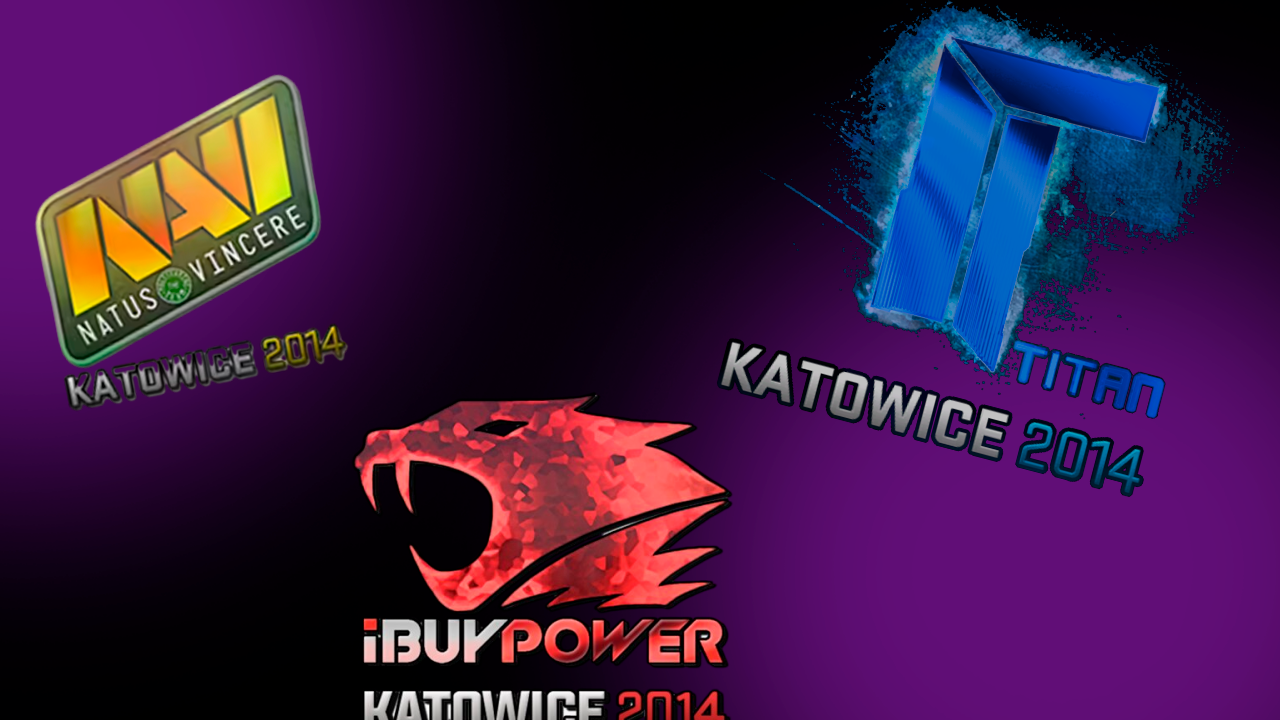
A classic example is skins with unscratched Katowice 2014 stickers. Even cheap base skins with these stickers can sell for many times more, simply because the stickers are no longer obtainable and are considered iconic.
That said, the market almost never values stickers at their full price. Usually, only a percentage of the sticker’s value is added — and only if:
- the sticker is well positioned
- it’s not scratched
- it visually fits the skin
Otherwise, stickers can actually hurt liquidity. Bad crafts, overloaded designs, or unpopular teams narrow the buyer pool. Such skins are harder to sell, even if they are technically “more expensive.”
Patterns, special variants, and sticker crafts all work on the same principle — they create scarcity where it normally wouldn’t exist. When an item can’t be easily replaced with “the same one,” the price stops being generic and becomes negotiable.
At this level, CS2 skins stop being just cosmetics and turn into real collectible assets — with their own logic, rarity, and history.
How to Check the Market Price Correctly
Understanding a skin’s real value helps you avoid overpaying — and keeps you from selling good items too cheap. In Counter-Strike 2, it’s important to compare prices across several sources instead of relying on just one.
Steam Market Pricing
Sale listings and buy orders are two very different things. Active listings show how much sellers want to get for a skin. Buy orders show how much people are willing to pay right now. The real market price usually sits somewhere between these two numbers.
The difference between buy price and sell price is called the price spread. The smaller it is, the more actively the skin is traded — and the easier it is to sell quickly without losing much value.
Third-Party Marketplaces
Prices on third-party sites are often lower than on Steam. That’s because sellers receive real money instead of platform balance. Fees are also usually lower, so people are more willing to undercut prices.
On blix.gg, you can compare skin prices across multiple trading platforms at once. This makes it easy to see where an item is cheaper, where it’s more expensive, and what its realistic value actually is. The service also shows Steam prices, which makes comparisons much simpler and faster.

Historical Price Trends
A price chart helps you understand the bigger picture. Smooth, steady growth usually points to stable demand, while sharp spikes often mean news, hype, or short-term speculation. It’s better to look at a few months of data rather than just a couple of days.
A good example is AK-47 | Wild Lotus. Since its release, the price has been rising quite steadily, followed by a sharp jump toward the end of 2025. Right now, there are fewer than 3,000 of these skins left in Steam inventories, which naturally fuels demand and hype.

Game updates, operations, and major tournaments almost always affect the market. After such events, prices can either climb or drop sharply — especially if the interest was temporary.
Artificial hype is usually easy to spot: a sudden price surge with no real reason, followed by a fast decline. In hindsight, these spikes rarely turn into long-term growth, so it’s best to treat them with caution.
Supply, Demand, and Market Dynamics

A skin’s price in Counter-Strike 2 is shaped by the balance between supply and demand. Understanding how these forces work makes it much easier to judge how desirable an item is — and how its price might move over time.
Supply Factors
The number of available skins has a direct impact on price. If a case is still actively dropping in-game, new copies keep entering the market, which usually slows down price growth.
Once a collection is removed from the drop pool, supply starts shrinking. Over time, fewer skins are available: some stay locked in player inventories, others change hands, and truly rare versions slowly become more valuable.
Demand Drivers
Demand is driven by interest from players and collectors. Skins that are actively used by pro players at tournaments often gain visibility and become easier to sell.
Weapon popularity matters just as much. Rare skins for frequently used weapons trade faster and tend to bring more stable returns.
Game updates and in-game events can shift demand quickly. A new case, changes to drop mechanics, or the release of attractive new patterns can suddenly boost interest in older items — or, on the contrary, reduce it if a new alternative appears.
Liquidity and Real Sell Value
Market price and the actual selling price are not the same thing. Liquidity determines how fast you can sell a skin and how much you’ll realistically get for it. This is where many players get disappointed for the first time: a skin “costs” one amount on paper, but selling it at that price turns out to be almost impossible.
Understanding Liquidity
Liquidity is a skin’s ability to sell quickly without a major price cut. It depends on demand, weapon popularity, and transaction volume.
Highly liquid skins:
- sell dozens or even hundreds of times per day
- have a steady flow of buyers
- move easily even with a small markup
These usually include:
- popular AK-47, AWP, and M4 skins
- standard knives without complex or niche patterns
- Factory New and Minimal Wear versions
Low-liquidity skins are the opposite:
- rare or unusual patterns
- unique sticker crafts
- niche weapons
- uncommon conditions
They can be expensive on paper but may take weeks or even months to sell.
Sale speed depends directly on how well your skin fits mass demand. If an item is bought every day, it can sell within hours. If trades happen only once every few days, you’ll either need to wait — or lower the price.
Quick Sell vs Maximum Value
In practice, every skin has two realistic prices: a quil sale price and a maximum price.
The quik sale price is what you can get almost immediately. It’s usually:
- close to current buy-side demand
- below the average market listing price
- aligned with real, active buyers
This option is used when:
- you need money right now
- speed matters more than profit
- the market feels unstable
The maximum price is what you can achieve with patience. It assumes:
- listing above current offers
- waiting for a buyer who wants that exact item
- being ready to hold the skin in your inventory
The lower the liquidity, the bigger the gap between these two prices. For popular skins, the difference might be just a few percent. For rare or collectible items, it can reach tens of percent — or even more.
How to Avoid Common Pricing Mistakes
Even experienced players sometimes misjudge skin prices — and beginners do it all the time. Most problems come from paying too little attention to how the market actually works.
Misreading Listings
Overpriced listings are very common on marketplaces. This happens because sellers often look at desired profit or random expensive listings instead of real completed sales. Some listings are intentionally inflated, hoping an inexperienced buyer will bite.
At the same time, the lowest price in the list doesn’t always reflect real value either. That item may sit unsold for a long time or be listed cheaply because the owner needs quick cash. To get a realistic price, it’s always better to compare values across multiple platforms.
Overestimating Float or Pattern
Low wear only adds value when it actually matters for that specific skin. For mass-market and cheap items, a perfect-looking float often has little to no impact on price, despite how nice the numbers look.
Ignoring Market Risk
The skin market is highly sensitive to updates. Changes to lighting, weapon balance, or drop systems can quickly reduce interest in certain items. Looking back, there have been plenty of cases where skin prices dropped sharply right after major updates.
If you play on xplay.gg servers and have already earned skins, you can easily sell them through CS.MONEY — there’s a direct link available in the main menu.
Is the Skin a Good Investment?
Long-Term Appreciation Factors
Price growth is almost always tied to rarity and consistent demand. The harder an item is to obtain — and the more often players want to buy it — the higher the chance its value will slowly increase.
Visual appeal plays a big role too. Bright, recognizable skins are bought more often and are popular to show off in matches. If a skin regularly appears on streams and tournaments, interest grows — and prices usually follow.
Items that are no longer available through drops deserve special attention. Market history shows that these skins tend to rise faster than most others.
Below are examples often seen as promising long-term picks:
- AK-47 | Head Shot — a skin from the Revolution Collection that stands out under the new lighting system, looking noticeably different in-game and on inspection.
- Glock-18 | Water Elemental — an older skin from the Operation Breakout 2014 case, long considered a classic and a “timeless” item.
- AWP | Atheris — an affordable skin that looks more premium than its rarity suggests and remains consistently popular with players.
Risk vs Reward
Holding skins always involves risk. Developers can change core mechanics — for example, when knife crafting was introduced, the skin market dropped hard.
Trends matter as well. If player interest shifts toward newer designs, selling older skins becomes more difficult. That said, there are classics like AWP | Asiimov or AWP | Dragon Lore that remain desirable no matter the meta.
The skin economy is known for its volatility. Looking back, there have been periods where prices doubled in a short time — only to fall just as fast. In the end, skins can bring profit over long holding periods, but they should never be seen as a guaranteed way to make money.
Step-by-Step Checklist to Evaluate Any CS2 Skin
1. Rarity tier
Start by identifying the rarity tier. It sets the price floor and immediately shows which market segment the skin belongs to.
2. Wear (float value)
Check the exact float, not just the condition label. Low floats or borderline values (for example, FN 0.06 / MW 0.07) often come with a price premium.
3. Pattern and visuals
Evaluate the pattern:
- does the skin look better than average?
- is there any visual uniqueness (good placement, colors, symmetry)?
Even without an officially “rare” pattern, looks matter a lot.
4. Steam price vs third-party prices
Compare the Steam price with offers on other marketplaces. Focus on real completed deals, not just listed prices.
5. Liquidity
Check:
- how fast the skin usually sells
- how many sales happen per day
Even an expensive skin is a bad asset if it’s hard to sell.
6. External demand
Take into account:
- the current meta
- tournaments and esports hype
- updates and overall interest in the weapon or collection
7. Sell or hold
- Hype + strong demand → sell.
- Limited supply + stable interest → holding can make sense.
Conclusion
Valuing skins in Counter-Strike 2 requires attention to several key factors: rarity, visual appeal, supply and demand. It’s a mistake to rely only on the lowest listing or attractive float numbers — the real price is shaped by sales history and liquidity.
Understanding market dynamics, the impact of updates, and the influence of pro play helps make more accurate decisions. Tools like blix.gg make analysis easier by showing real trades and clear differences between Steam and third-party marketplaces.