
Aim Maps vs Aim Servers: What Actually Improves Aim Faster in CS2?

Many players get confused when it comes to aim training because they see it as some kind of universal skill. It seems like you just need to hop on an aim map, shoot some bots regularly, and eventually your performance in matches will improve automatically.
On training maps, aim does get more consistent: movements are cleaner, you hit more shots, and your speed improves. But in real games, everything changes — opponents move unpredictably, shoot back, timing and pressure come into play, and mistakes happen. As a result, a player can practice a lot but still see little improvement in actual matches.
The main reason is that aim maps and aim servers develop different aspects of shooting. They serve different purposes and affect skill transfer to real matches in different ways.
In this article, the xplay.gg team breaks aim training down step by step: explaining exactly what aim maps and aim servers give you, and showing how to structure your practice so that your aim actually carries over to matches, instead of just staying on warm-up servers.
What’s the Real Difference Between Aim Maps and Aim Servers?
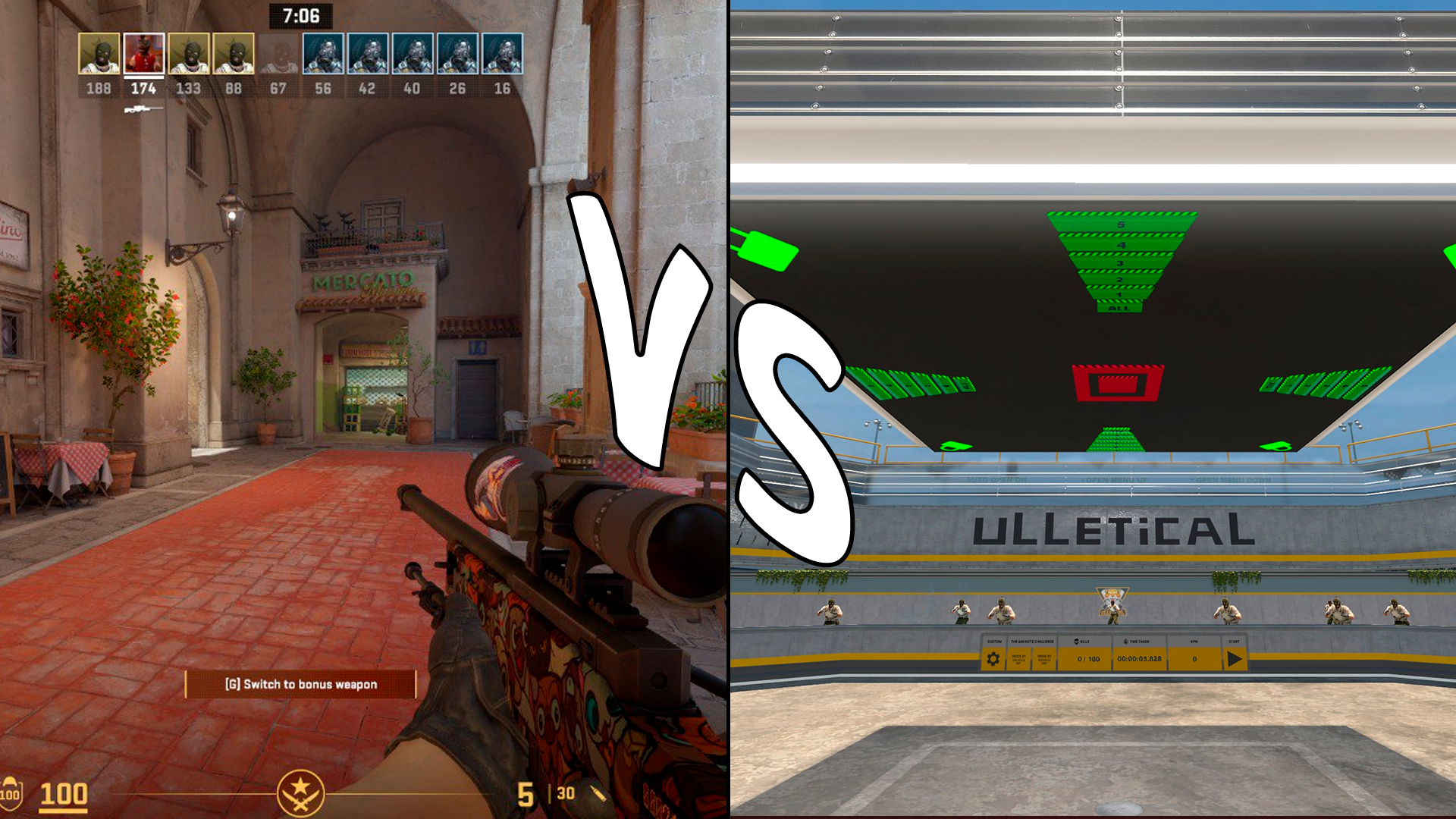
Both are used to train shooting in CS2, but they work on completely different principles and develop different skills.
How Aim Maps Work
Aim maps are special offline maps designed for practicing shooting in controlled conditions. Usually, the player is in a predictable environment, with bots or static targets as opponents. Distances, angles, and scenarios repeat over and over, creating a stable space for practice.
The main advantage of aim maps is fast control and repeatability. They let you focus purely on mechanics: mouse movement, aiming precision, and timing your shots. Without chaos or outside factors, aim feels cleaner and more stable. This gives quick visual and tactile feedback that can easily be mistaken for real progress.
Aim maps isolate specific skills:
- basic accuracy
- micro-corrections
- sensitivity control
- muscle memory
Because of this isolation, shooting on maps feels confident and smooth. Nothing distracts from hitting targets, so aim often looks better than it does in real matches.
If you want to dive deeper into choosing high-quality training maps and see which ones are best for improving aim and reaction in CS2, check out our article “Best Maps for Aim and Reaction Training in CS2.”
How Aim Servers Work
Aim servers are online servers where players face each other in continuous duels. There are no preset scenarios or repeated patterns of behavior. Every opponent is a real person with their own habits, mistakes, and reactions.
The key difference between aim servers and maps is the presence of real players. Every action triggers a reaction, so shooting stops being purely mechanical and becomes situational, just like in real matches.
The unpredictability of servers comes from several factors at once:
- different player movement styles
- constant pressure and risk of death
- random timing and positioning
- the need to make split-second decisions
Aim servers are much closer to real matches, training not just mechanics but also adaptation and decision-making under pressure.
What Aim Maps Actually Improve (And What They Don’t)
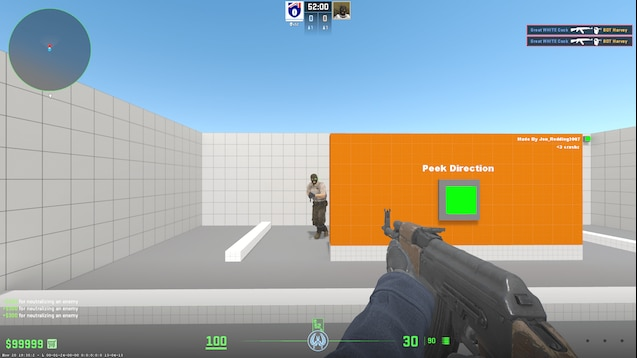
Aim training maps are only really good for specific purposes. Let’s break down what they’re actually useful for.
Skills That Improve Faster on Aim Maps
Aim maps are best for building basic shooting mechanics.
- Quick flicks between targets. Repetitive drills let you automate mouse movement and eliminate extra jitter.
- Basic tracking. Even simple target movement helps stabilize your hand, keep the crosshair on the opponent, and better feel their speed.
- Raw mouse control. Maps provide a safe environment to tweak sensitivity, grip, and movement amplitude. You can easily spot mechanical mistakes and fix them without any external pressure.
That’s why these maps are especially useful for:
- beginners
- players who have changed mouse sensitivity or their mouse
- anyone with unstable basic accuracy
Limitations of Aim Maps
The main limitation of maps is the lack of pressure. Mistakes don’t have consequences: you don’t lose a round, give up a position, or harm your team.
The second major issue is no need to make decisions. On maps, there’s no choosing when to peek, positioning, or evaluating risk. You don’t account for timing or opponent movement — the target either appears right in front of you or follows a set path.
In real matches, shooting is almost always tied to multiple choices: shoot or wait, react to the opponent or hold back. You also need to listen to footsteps, coordinate with the team, and move correctly. All of this makes pure mechanical skill less effective, and players can get lost juggling all the tasks.
For this reason, over time, progress on maps tends to hit a ceiling.
What Aim Servers Improve Better Than Maps
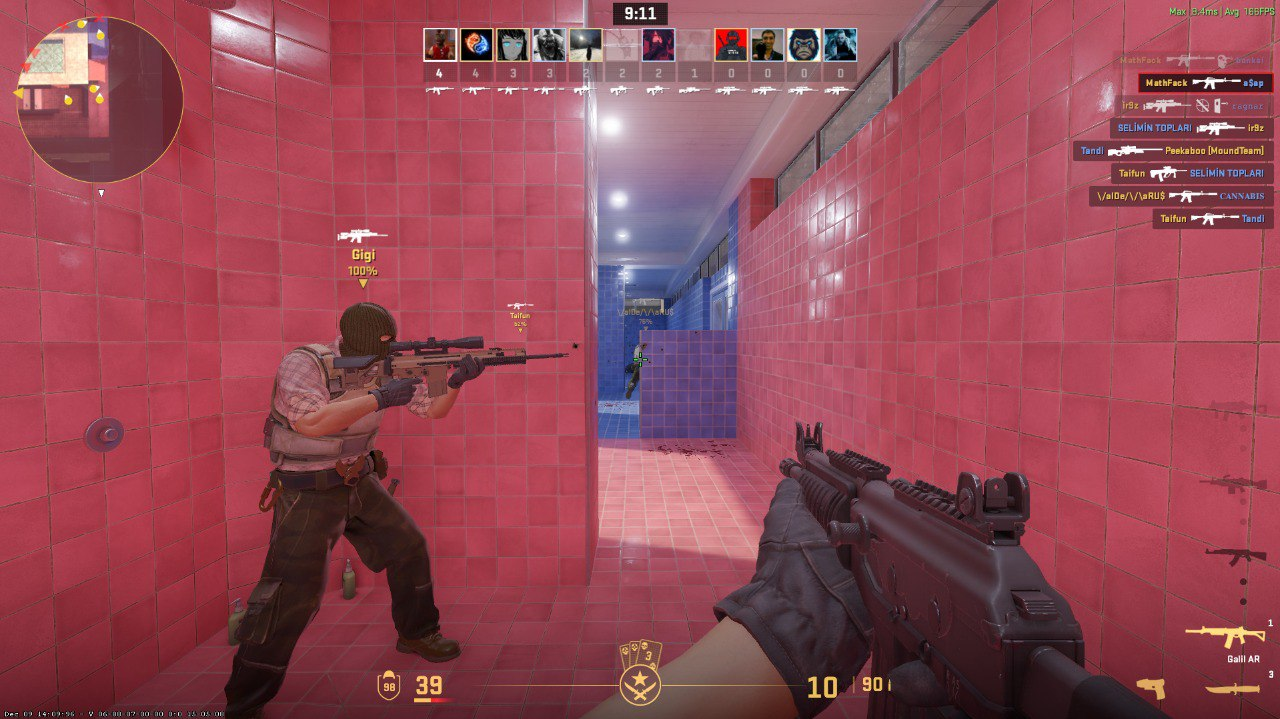
Aim training servers often feel less comfortable than maps. It’s harder to show consistent shooting, the pace is faster, and mistakes happen more often. But that’s exactly where their main value lies.
Aim Under Pressure
Pressure drastically affects shooting accuracy. When an opponent shoots back, there’s less time to aim, and a single mistake can get you killed instantly. Under these conditions, your aim starts to falter, movements get sharper, and the usual mechanics don’t work as cleanly as on maps.
A real player constantly changes trajectory, speed, and distance, uses fake movements, and punishes hesitation. As a result, shooting becomes less of a mechanical action and more of a reaction to the situation.
Servers force you to adapt. Players have to:
- aim faster
- shoot from awkward positions
- adjust their aim mid-duel
- maintain control under constant pressure
For those just starting to practice on community servers and wanting to learn how to train effectively with different modes, we recommend checking out our article “How to Play on CS2 Community Servers.”
Skill Transfer to Real Matches
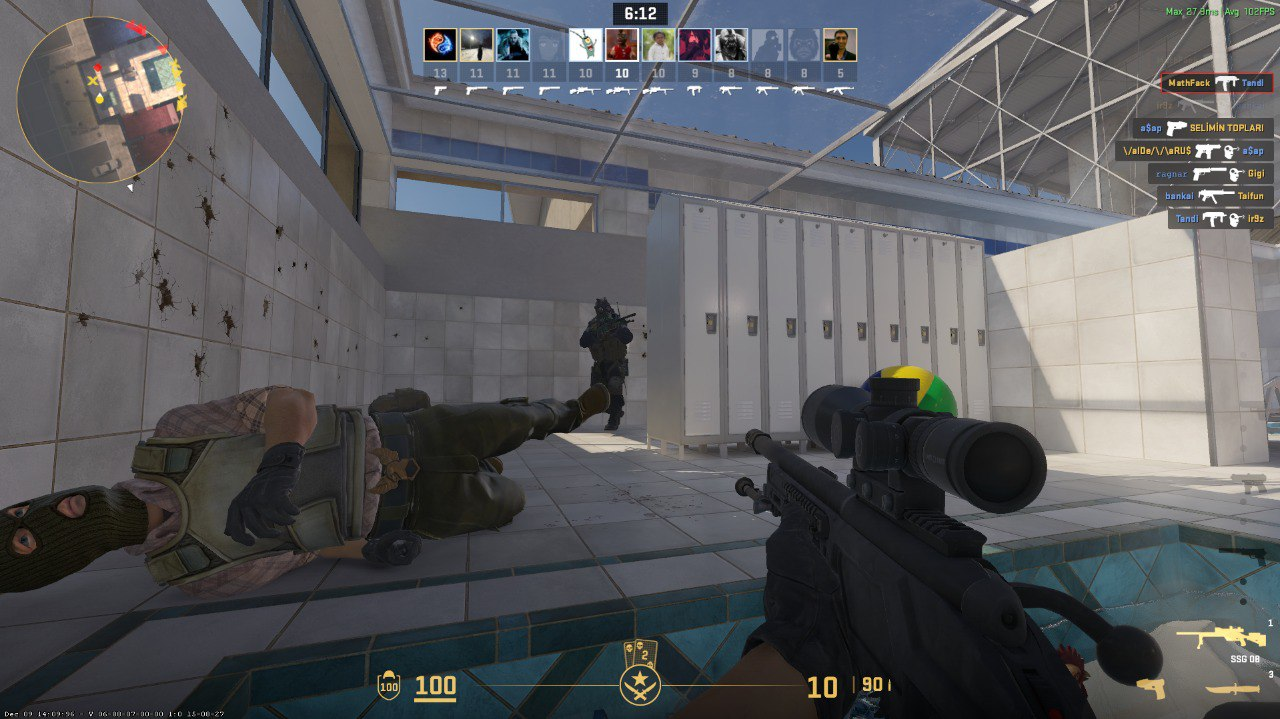
Aim training servers are much better at transferring skills to ranked games and competitive modes. That’s because the conditions on servers are much closer to real matches.
Skill transfer is the ability to apply practiced actions in new, unpredictable situations. Maps train mechanics in isolation, while servers teach you to use them dynamically — with movement, timing, and pressure.
Regular practice on xplay.gg servers builds the habit of shooting under chaotic conditions, so aim trained on servers is less likely to “disappear” in matches and adapts faster to the real pace and style of play.
Aim Maps vs Aim Servers by Skill Level
You can’t use the same training method for a beginner and a pro — the effectiveness of the tools is different, and training goals change.
Beginners
For beginners, the ideal starting point is aim training maps. They help develop basic mouse movements, accuracy, and tracking without extra pressure.
At the same time, it’s important to avoid jumping straight into servers against real players, where the speed of decision-making and chaotic firefights can slow down mastering the basics. Too difficult conditions early on can create bad habits and be demotivating.
Intermediate Players
Once basic mechanics are mastered, it’s time to add servers to your training. They teach working under pressure, reacting to opponent movement, and making real-time decisions — things that can’t really be practiced on maps.
Advanced Players
At high levels, the real advantage comes from servers. Regular practice on servers helps prevent bad habits and keeps aim sharp even in the most intense matches.
The xplay.gg team offers servers for training different strategies and game situations: you can choose Retake, Deathmatch, or other specialized scenarios. This allows advanced players to practice not just pure shooting, but also decision-making, positioning, and team coordination under conditions as close to real matches as possible.
If you want to pick the best places to practice against real opponents, check out our article “Best CS2 Deathmatch Servers in 2025: Features Compared.”
Can Aim Servers Replace Aim Maps?
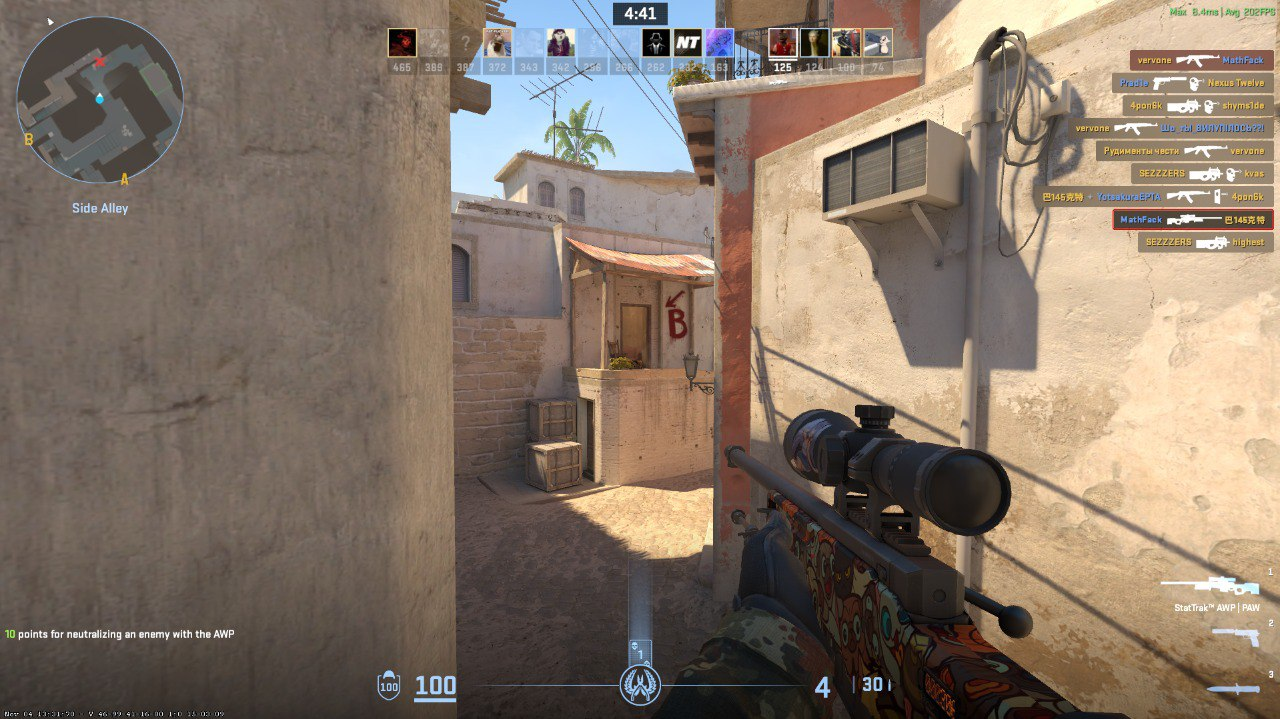
im servers can’t fully replace maps. It might seem like constantly playing against real opponents gives you everything at once, but in practice, that’s not the case.
Maps are still needed for the basics: accuracy, tracking, mouse control, and muscle memory. Servers don’t provide perfect repeatable conditions — they’re chaotic and unpredictable. Without a solid foundation from maps, progress on servers will be unstable, and bad habits can form.
The Fastest Way to Improve Aim: Combining Maps and Servers
The most effective training model combines both methods. The optimal order is maps first, then servers.
Example routine:
- 10–15 minutes on maps — warm-up, working on flick shots, tracking, and mouse control.
- 20–30 minutes on a server — duels against real players, adapting to chaos, practicing under pressure.
Order matters: first isolate the mechanics, then apply them in real-game dynamics. This combo develops aim comprehensively, speeds up progress, and makes skills more stable in matches.
On average, beginners and intermediate players need 30–45 minutes of practice, while advanced players benefit from 45–60 minutes, focusing on specialized xplay.gg servers where you can choose modes to train different in-game situations.
Common Aim Training Mistakes
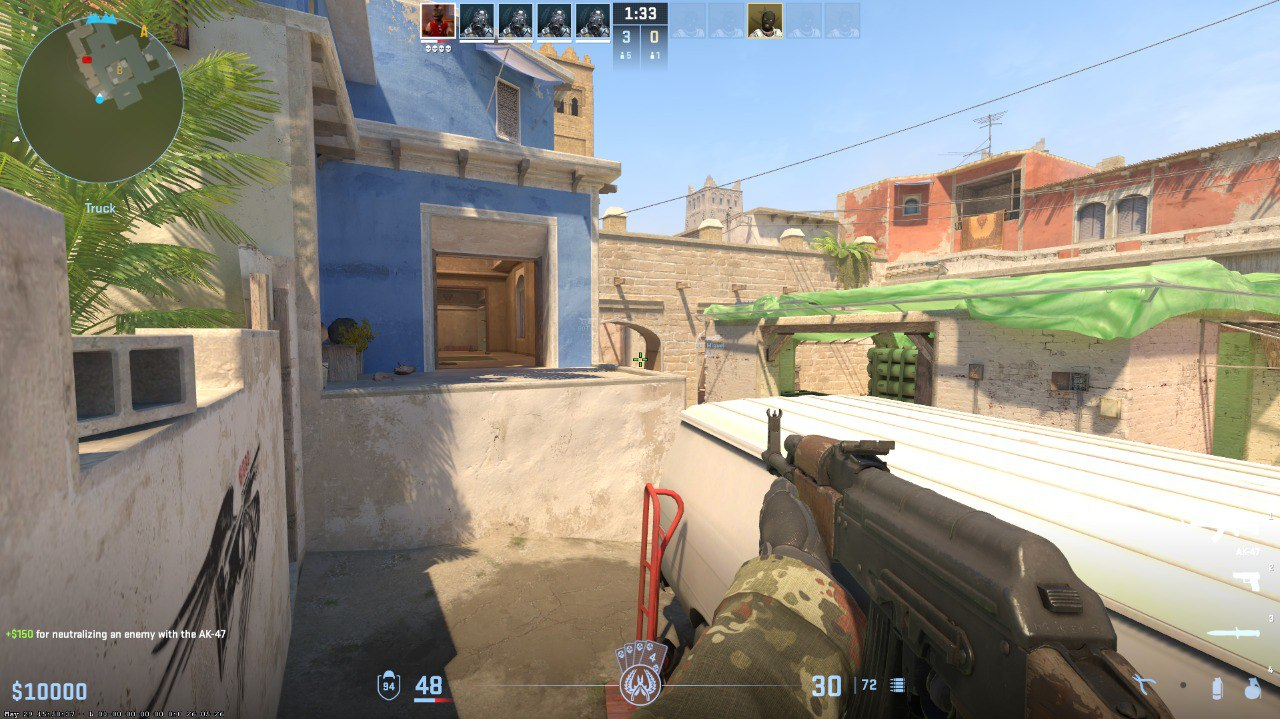
Grinding aim maps only
Many players spend hours only on aim training maps. This improves basic accuracy but doesn’t develop the skill of adapting to real conditions. Without practicing against real opponents, progress quickly hits a ceiling, and confidence on maps doesn’t carry over into matches.
No real opponents
Training exclusively on bots or static targets doesn’t give experience against unpredictable players. Real opponents move, fake actions, and react to your plays, creating pressure. Without this, the adaptation element remains underdeveloped, and shooting under stress has to be learned from scratch.
No clear goal
Another common mistake is training without a concrete plan. Shooting just for the sake of shooting, without focusing on specific skills (flick shots, tracking, working under pressure), gives the illusion of progress. Clear goals and a structured routine help track improvement and turn practice into a tool rather than just mechanical repetition.
FAQ
Are aim maps useless?
No, maps are very useful for developing basic mechanics, mouse control, and accuracy. They’re especially valuable for beginners or as a warm-up.
How long should I train aim daily?
30–60 minutes a day is optimal, combining maps and servers. Short, regular sessions are more effective than long, infrequent ones.
Should I warm up on maps or servers?
Start on maps to warm up and work on accuracy, then move to servers to adapt to pressure and real opponents.
Why aim improvement feels inconsistent?
Because skills developed in isolation don’t always transfer to real matches. Progress is more consistent when maps and servers are combined.
Why does aim feel better on maps than in real matches?
A common source of frustration is the big gap between how aim feels on maps versus in actual games. On maps, aim feels fast and confident, but results in matches are often worse. The main reason is that maps isolate mechanics from real conditions: there’s no pressure, no need to make decisions, and no unpredictable opponent movement.