
Why Your CS2 Practice Server Feels Bad: Ping, Bots, Spawns, and Fake Player Counts

You join a CS2 practice server to warm up, then spend the next five minutes getting shot in the back, spawning into crossfires, and waiting for one clean duel. The server browser promised a busy lobby, but once you connect, several players are AFK, repeat the same route, or take the same bot-like peek every life.
That doesn’t automatically mean your skill is the problem. CS2 practice server quality depends on more than your mechanics. High latency, packet loss, poor routing, bot-filled slots, messy spawns, or the wrong mode can feed you bad reps and make solid mechanics feel inconsistent.
Before you change your sensitivity or waste another hour on a poor server, check the practice conditions. A good server gives you stable feedback, active opponents, and enough repeatable fights to train the skill you actually came to improve.
Bad Practice Servers Give Bad Feedback
CS2 practice works when you can connect an action to a result. You swing with a clean counter-strafe, place the crosshair at head level, and see if the first bullet lands. If you miss, you can adjust the next rep.
A poor server breaks that loop. Delayed movement makes a normal peek look impossible to hold, while random spawns force constant 180-degree flicks instead of proper angle clearing. Bots give you easy kills until a real player wide-swings and punishes the timing you just learned. If the server cannot reproduce the skill or provide a stable connection, stop using it.
Community DM can offer more frequent fights and sharper rules than official DM, but only when the server itself runs well. Official DM works for a quick, casual warm-up; a good community server usually gives you more control over weapons, opponents, and pace. The label proves nothing, so judge the quality of the reps after you connect.
Ping and Stability: The First Quality Check
Start with ping, but don't read it as a perfect score. Distance, routing, Wi-Fi interference, packet loss, and server load all affect how the match feels.
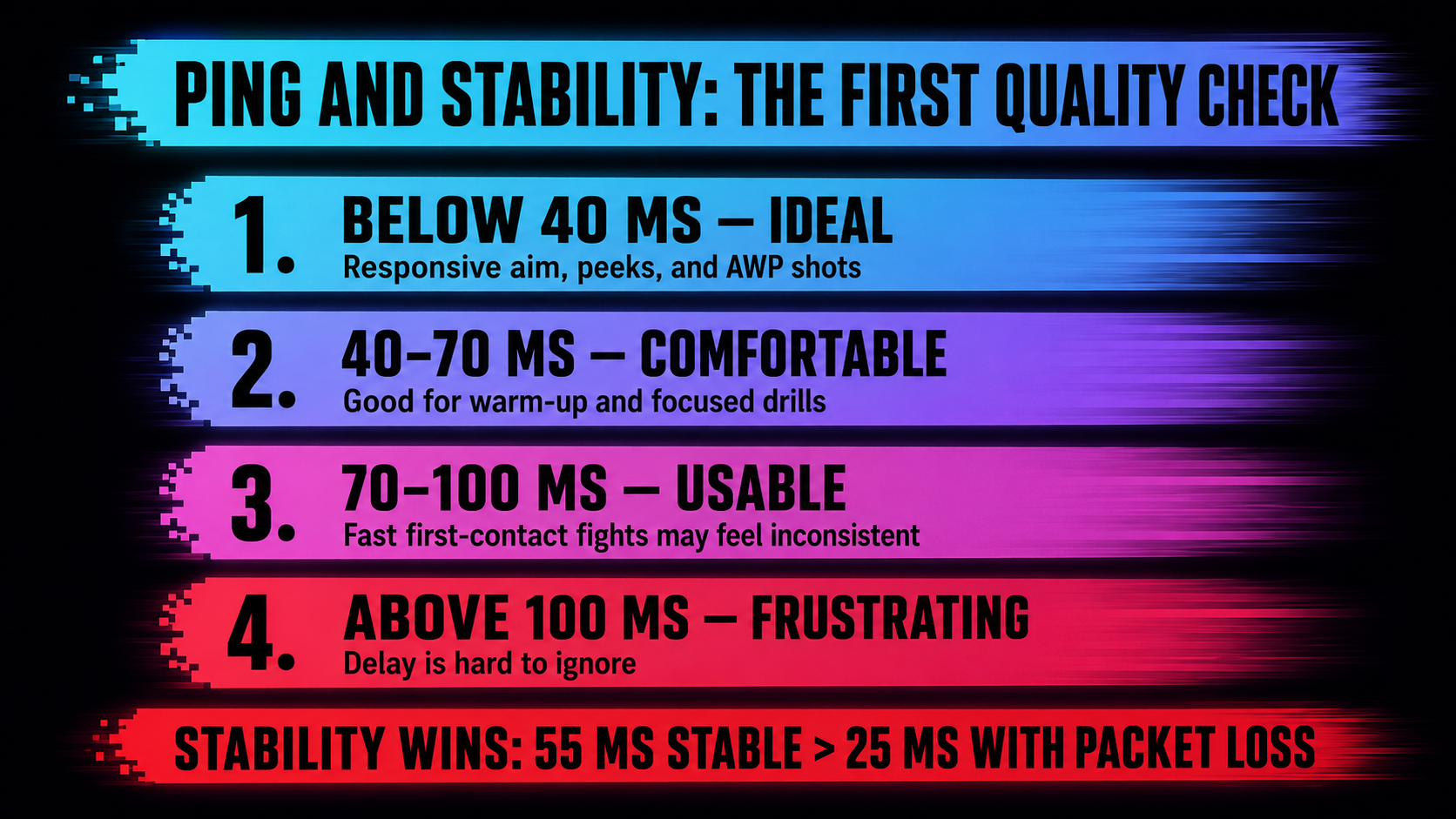
As a practical guide:
- Below 40 ms: ideal for most aim work. Peeks, counter-strafes, and AWP shots should feel responsive.
- 40–70 ms: comfortable for general warm-up and usually playable for focused drills.
- 70–100 ms: usable, but fast first-contact fights may feel less consistent.
- Above 100 ms: the delay becomes hard to ignore and usually makes focused CS2 practice frustrating.
These are useful ranges, not hard laws. A stable 55 ms connection can feel much better than 25 ms with packet loss. Watch for micro-teleports, backtracks, delayed weapon switches, shots that don't register, or enemies skipping through a swing. One spike can happen; repeated spikes ruin the drill.
Low ping matters most when the training depends on a tiny timing window. In Duels, one clean counter-strafe can decide the fight. In AWP DM, delayed first contact can make a correct pre-aim feel late. Casual Deathmatch gives you more room because the goal is often to warm-up, track targets, and take lots of fights.
If the delay stays high, leave and select a closer location. A full server on another continent is worse practice than a quieter local lobby. You can also choose the nearest region and lower your ping before touching network settings or blaming hit registration.
Bots, Fake Player Counts, and Real Server Activity
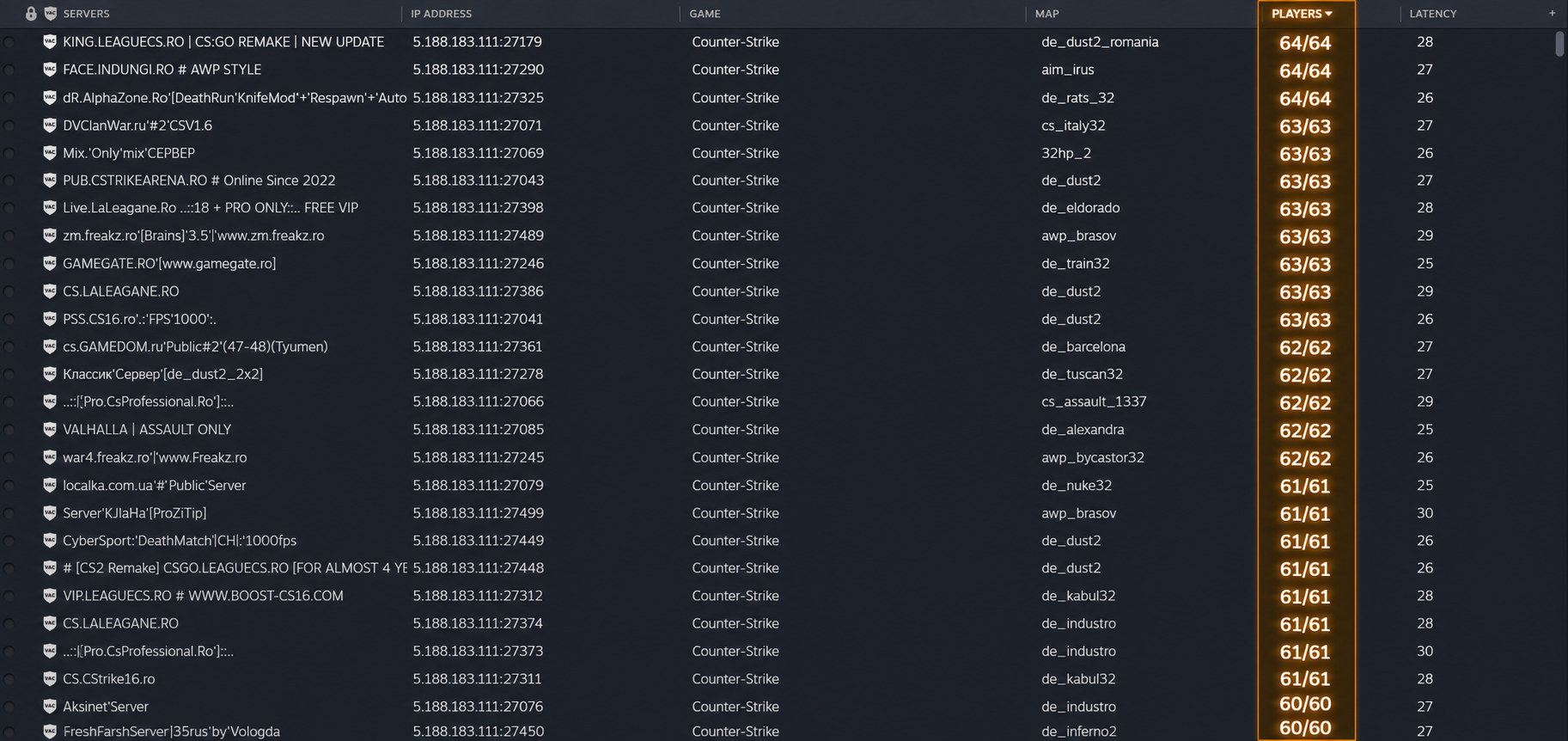
A server can display 18 players and still feel empty. The number may include bots, spectators, AFK players, or slots that have not refreshed yet. A mismatch is not always deliberate inflation, but the browser count still tells you less than the activity you see after joining.
Bots may occupy server slots and appear in the displayed population, but they are not the same as active human opponents. Community servers may use standard CS2 bots or server-side plugins that adjust their aim, movement, and difficulty. Automated farming accounts can also look like ordinary players on the scoreboard.
Even sharper bots rarely reproduce human jiggles, counter-strafes, off-angles, or mid-round decisions. They can keep an off-peak lobby moving, but they shouldn't be the main source of feedback in focused practice. If several players follow the same route, react at identical timings, or idle between spawns, treat the displayed population with caution.
Use the first 60 seconds as a reality check:
- Open the scoreboard and compare the listed count with active names.
- Listen for repeated pathing, identical reactions, and bot-like weapon choices.
- Check how long you wait between real engagements.
- Notice if the same two players create nearly every meaningful duel.
- Ask if the lobby pace matches the number shown in the browser.
Don't stay just because the server looks full. Six active players on a compact map can produce better reps than twenty bodies spread across a large layout. If you are new to custom listings, the CS2 community servers guide explains how these servers differ from Valve matchmaking and what features to check before joining.
Spawns, Density, and Map Size Can Ruin Deathmatch
Deathmatch needs pressure, but useful pressure has a rhythm: spawn, read the nearest threat, take a duel, and reset your crosshair. Bad spawn logic removes that reset and turns every life into a coin flip.
Spawning near an opponent is not always bad because fast contact keeps the pace high. The problem starts when protection is inconsistent, the server places you inside a live crossfire, or several angles are exposed before you gain control. If that happens across multiple lives, you are training panic flicks and instant re-peeks instead of clean fights.
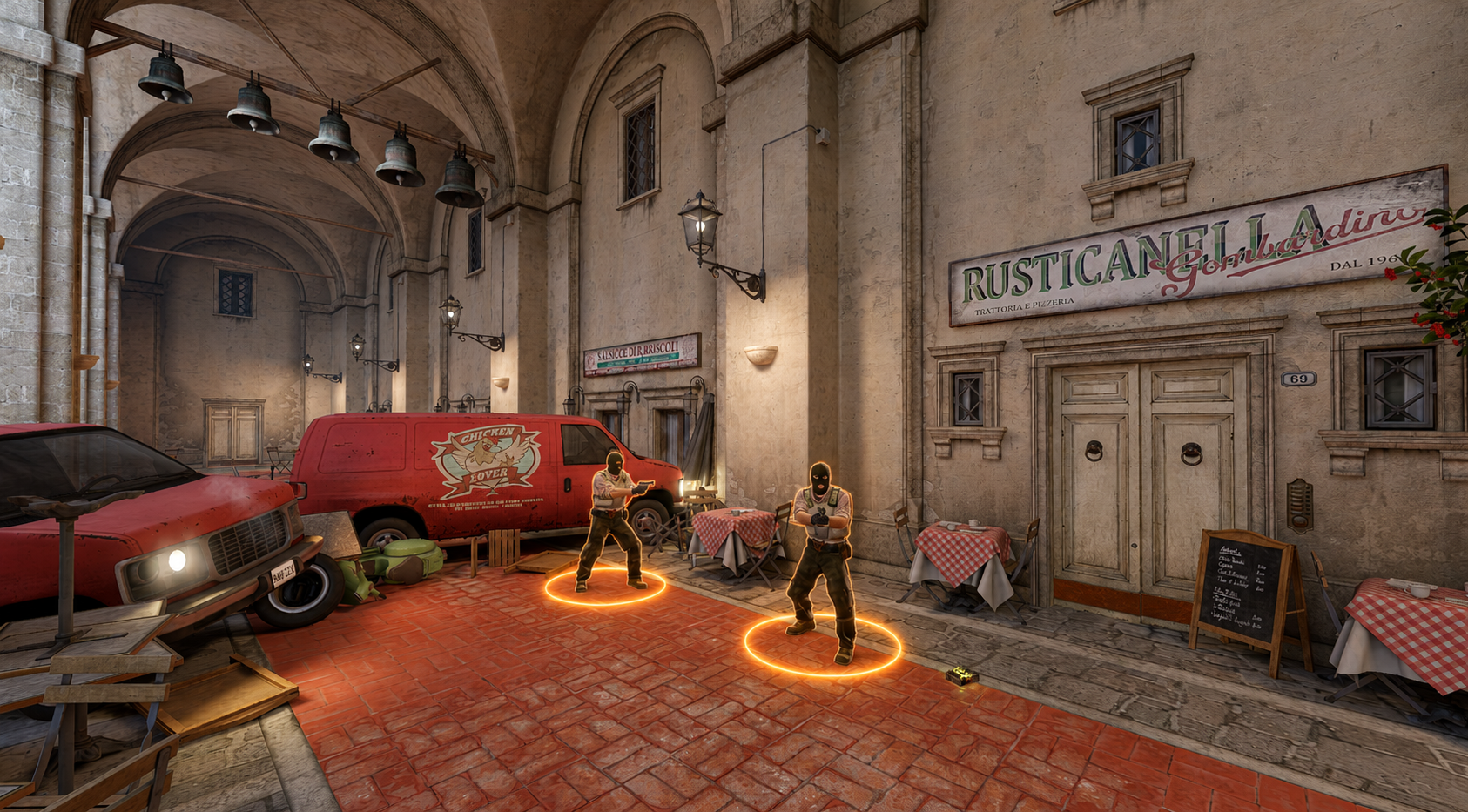
Density must also fit the map. Ten players can feel lost on a wide layout but overwhelm a compact aim map. Large maps need enough activity to keep common lanes busy, while small maps need room to counter-strafe and finish a duel before someone spawns behind you.
Crowded DM works for reaction speed and target switching, but not for first-bullet accuracy or disciplined angle clearing. If you start holding W toward gunfire and chasing the scoreboard, change servers. Judge DM by the quality of its engagements, not your K/D. For a deeper mode comparison, read HSDM vs Classic DM vs Pistol/AWP DM.
Mode Rules Matter More Than the Server Name
“Practice server” is too broad to tell you what the session will improve. Pick the rule set that targets your current weakness. If regular Deathmatch feels useless, you may need a different mode — not another DM lobby.
Quick Checklist: Should You Stay or Leave This Server?
Give the server one or two minutes, then check:
- Stable connection: no repeated ping spikes, packet loss, or stuttering.
- Real activity: enough active players for regular fights without relying on bots.
- Fair fight density: plenty of action, but not constant shots from random spawns.
- Useful rules: weapons, health refill, spawn protection, and map suit your goal.
- Repeatable practice: you can train the same skill and leave sharper, not tilted.
If two or more checks fail, switch servers. Look for the middle ground: stable ping, real opponents, and player density that fits the map.
Where xplay.gg Fits: Choose the Mode Before the Server
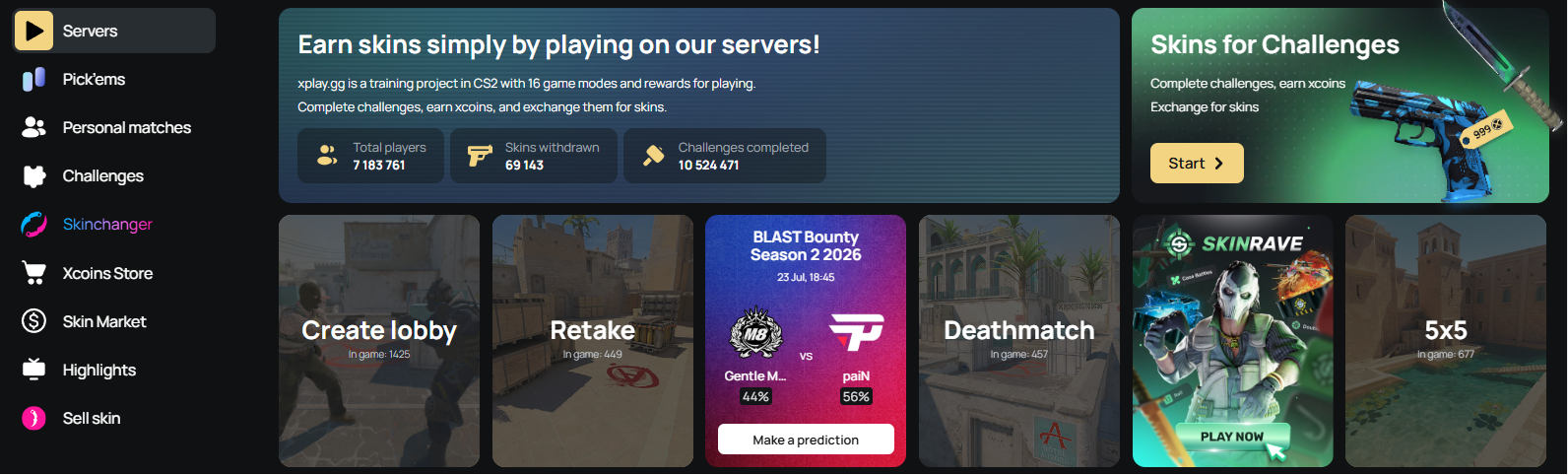
On xplay.gg, start with the skill you want to train, then compare region, ping, map, and active slots. Browse CS2 practice servers by mode and location instead of testing random community listings one by one.
When a specific peek keeps beating you, practice isolated fights on CS2 Duel servers. If your mechanics feel ready but your post-plants fall apart, move to Retake and repeat that pressure with utility, trades, and the bomb timer in play. The goal is simple: choose the mode that gives you the same decision or mechanic again and again.
Bottom Line: A Good Server Makes Practice Transfer
Good practice gives you clear feedback about what worked, what failed, and what to repeat. Sensible spawns create frequent fights without turning every life into a backshot, while the right mode keeps those fights relevant to the skill you want to fix.
Pick one weakness, choose the xplay.gg mode that reproduces it, and keep the block short enough to stay deliberate. Once the reps feel controlled, take that sharper aim or decision-making back into Premier or FACEIT.