
What to Check Before Buying CS2 Skins: Wear, Patterns, Stickers

Before buying a CS2 skin, inspect the individual copy for the detail that could make you regret it: a scratch through the design, an unwanted pattern, or a damaged sticker. Decide what would make the item unacceptable before comparing exteriors and floats. The same condition label can cover copies you would judge very differently.
These checks suit players buying a skin to use. Collectible premiums need separate price research, and even a clean-looking copy may have a sticker or pattern detail that makes it wrong for your loadout.
Decide What Would Make You Reject the Skin
Set a requirement you can actually check. On an illustrated rifle, it could be keeping the main figure intact. On a knife, it could be a particular color across the visible blade. This gives you a reason to accept one copy over another when both share the same exterior.
Keep that requirement specific to the way you will use the item. A rifle bought for its artwork and a plain base chosen for stickers need different checks. With the first, you want the illustration to remain readable. With the second, the sticker arrangement may matter more than a small mark on an uncovered panel.
Choose Between a Skin Preview and a Loadout Trial
Pick the viewing method that answers your current question. An individual item’s inspect link, a catalog image, and a manually configured server preview serve different purposes.
To explore a finish or glove combination before choosing a listing, preview CS2 skins in game. Once you have a purchase candidate, use its item-specific preview as the reference for its actual details.
A recreated loadout represents the settings you entered. It can answer a styling question, but it cannot confirm a seller’s item or add that item to your inventory.
Read the Item Record Before Trusting the Thumbnail
Float describes the wear of the weapon finish, while the paint seed identifies the pattern applied to that copy. Each attached sticker needs its own condition check.
- Open the individual Steam Community Market listing for your candidate.
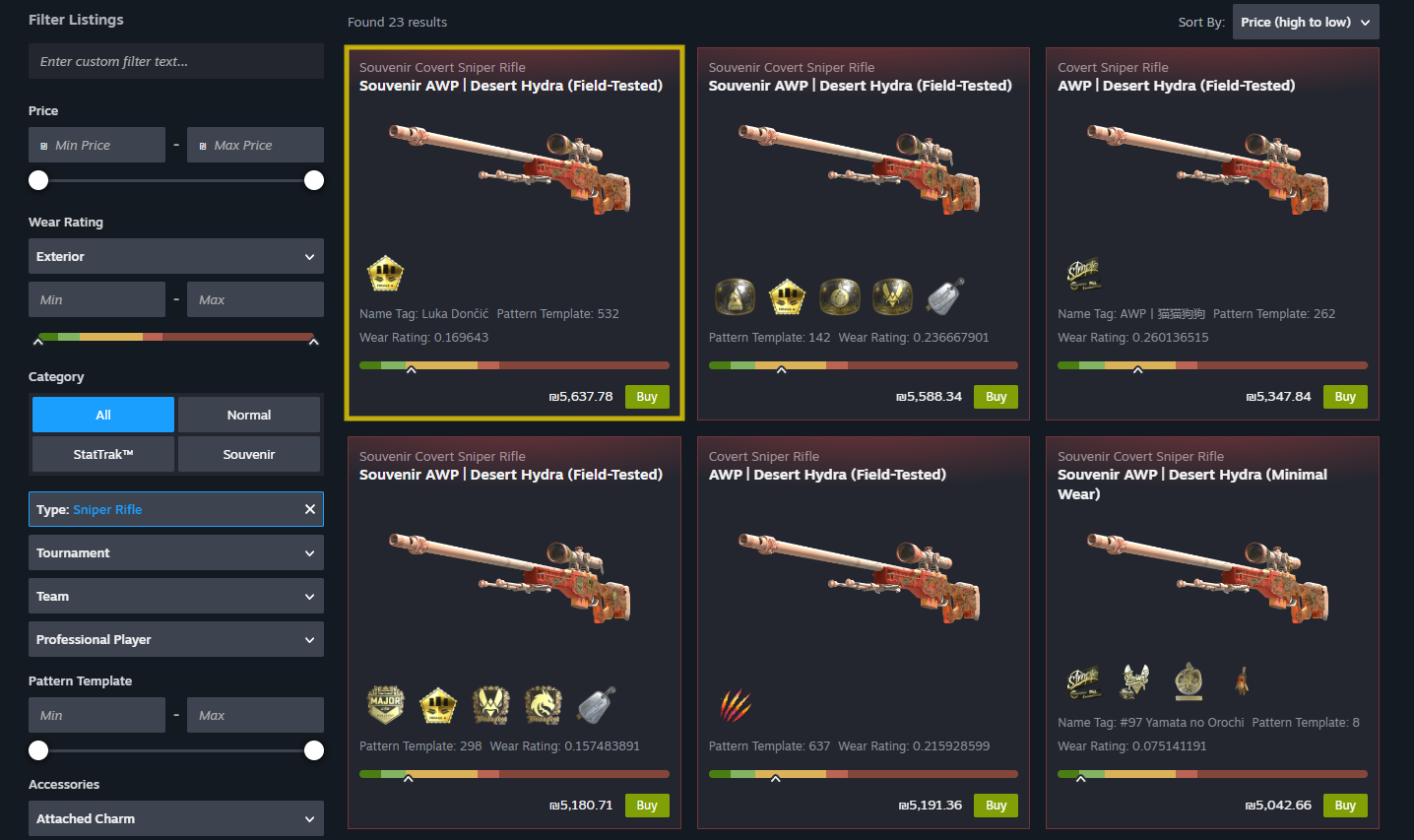
- Record its full name, version (standard, StatTrak, or Souvenir), float, paint seed, and stickers.
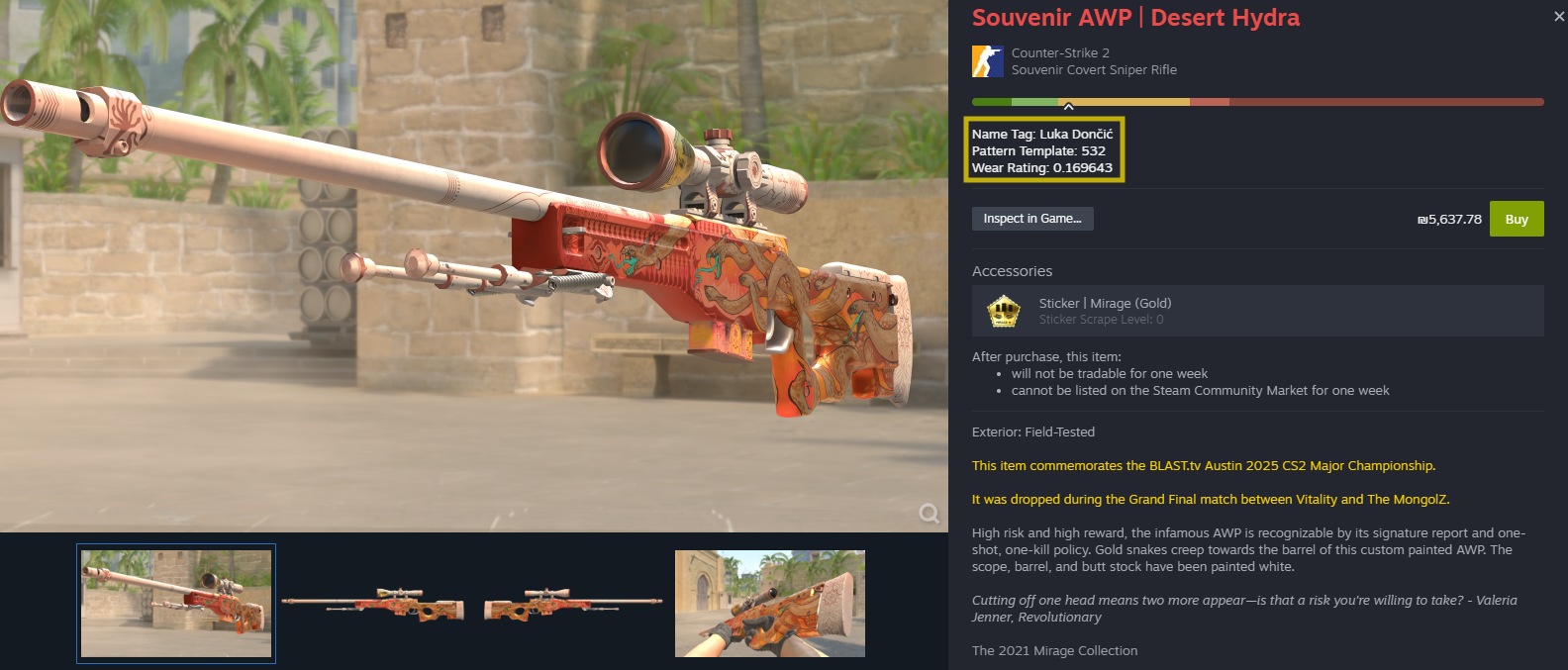
- Choose Inspect in Game... to examine that item in CS2.
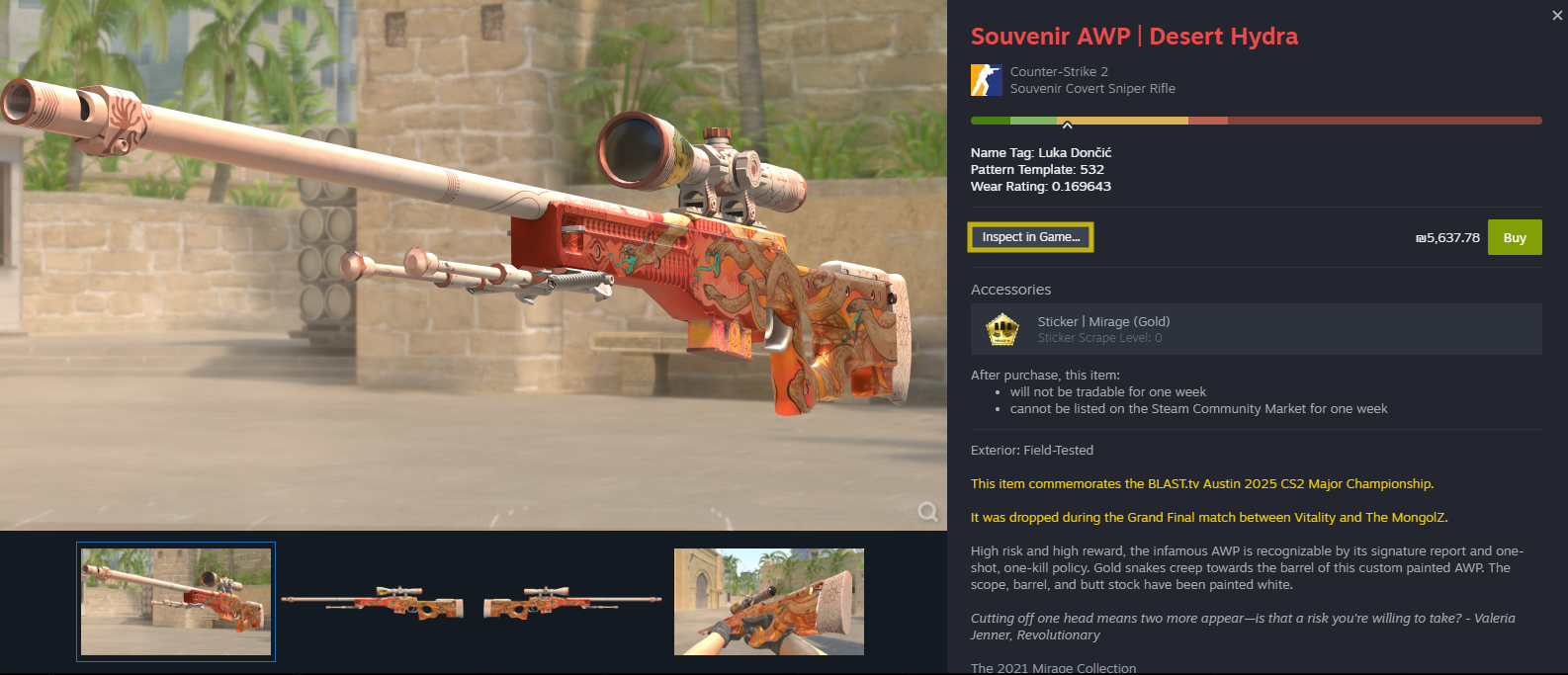
- Save the item link or a screenshot of its details for later comparison.
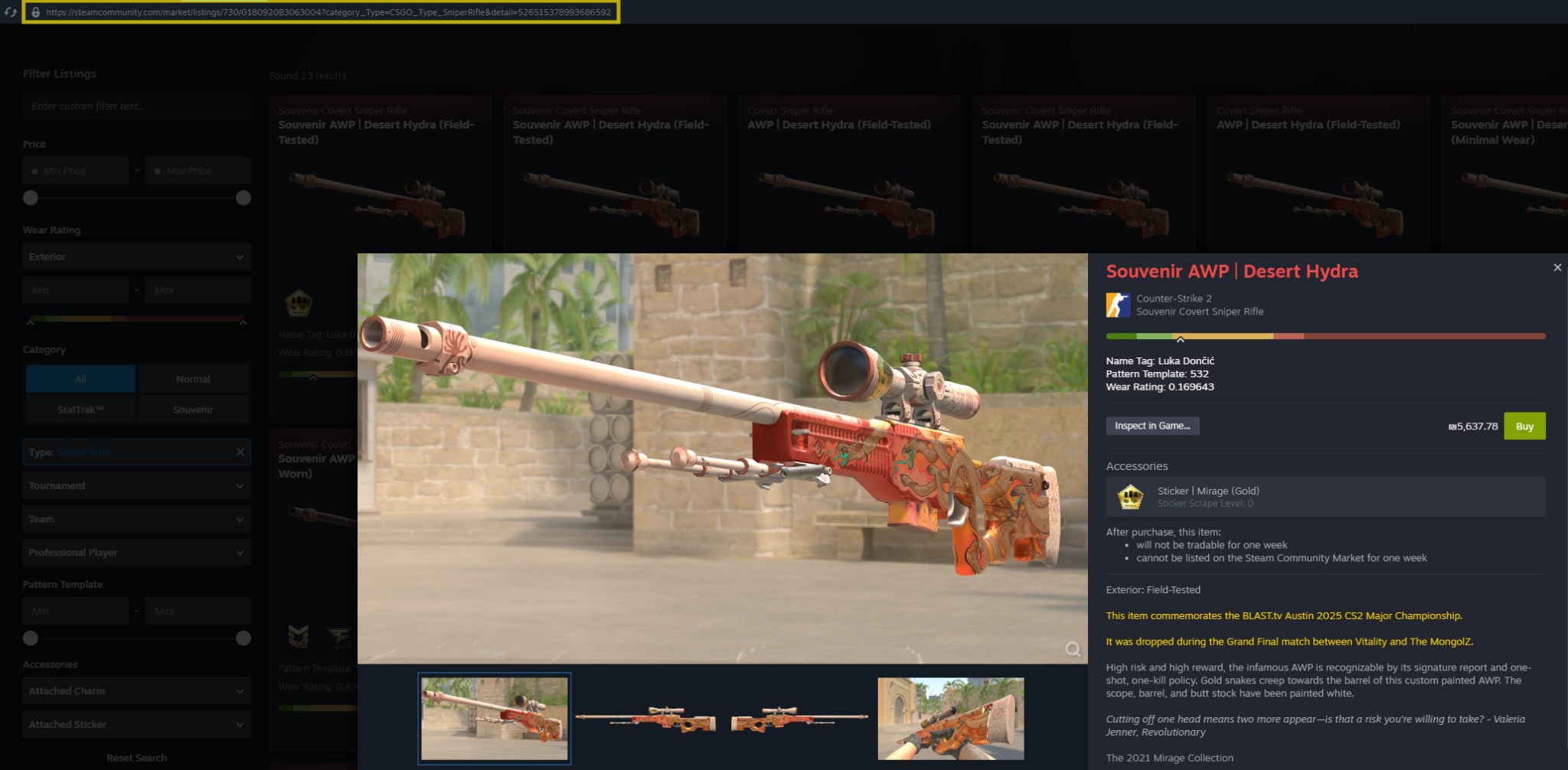
Use the same approach on a third-party marketplace: start from the individual listing and find its inspect link. A general product page may group many copies under one name. Opening the image at the top of that page doesn't establish which copy you will receive.
If the link doesn't open, check that Steam and CS2 are installed and try launching CS2 before using it again. If the preview remains unavailable, leave that candidate pending. A missing preview is not a reason to assume a generic screenshot matches the item.
An AWP Wildfire Record With a Scraped Autograph
The Steam item record for this AWP | Wildfire was marked unavailable when reviewed on November 1, 2026. Its details show how a sticker-specific requirement can eliminate a copy before you compare the gun’s appearance.
If your requirement is an intact ZywOo autograph, the nonzero scrape value rules this copy out. The weapon’s exterior and float don't answer that sticker-specific question. A generic picture of a Field-Tested Wildfire would miss the detail that decides this purchase.
Judge Wear by Its Location and Visibility
Follow the edges and surfaces around the design’s focal point: a face on the receiver, a pale panel on the slide, or a painted section of the magazine. Small marks underneath the weapon may matter less to you than one scratch through that feature.
For a knife, inspect the tip, blade edge, and the area where painted metal meets the handle. For gloves, check the fingertips, knuckles, and larger colored panels with both hands visible. Judge the wear across the pair, including any difference that makes one hand stand out more than you want.
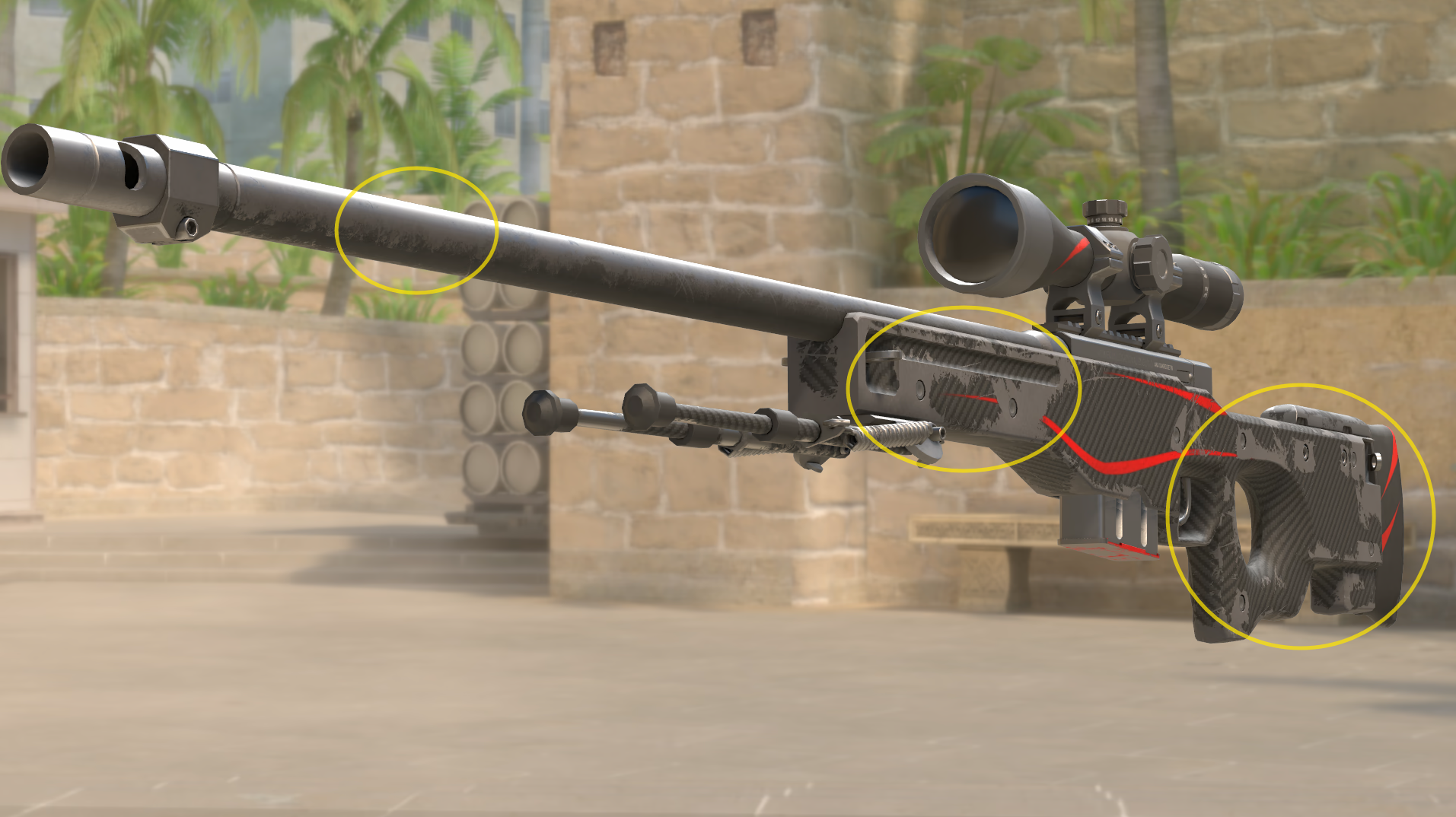
Valve’s weapon finishes guide explains how finish masks affect where surface damage appears. Judge the actual result before paying more for a lower float, especially when two candidates have similarly clean focal areas.
When the difference is subtle, keep two previews at a similar scale and compare one area at a time. Look at the main illustration first, then the exposed edges, and finally the less visible surfaces. This makes it easier to identify a meaningful improvement instead of being impressed by a cleaner overall thumbnail.
Avoid carrying a condition preference from one finish to every other skin. Decide how much wear you can accept on the particular design in front of you. A more expensive exterior is useful only if it improves something you wanted to keep.
Check the Skin Pattern on the Visible Surfaces
For finishes with visible pattern variation, inspect the color distribution on both sides and the top of the item. Match the seed to the candidate you saved. Some finishes vary little between seeds, so a pattern number alone is not a reason to favor a copy.
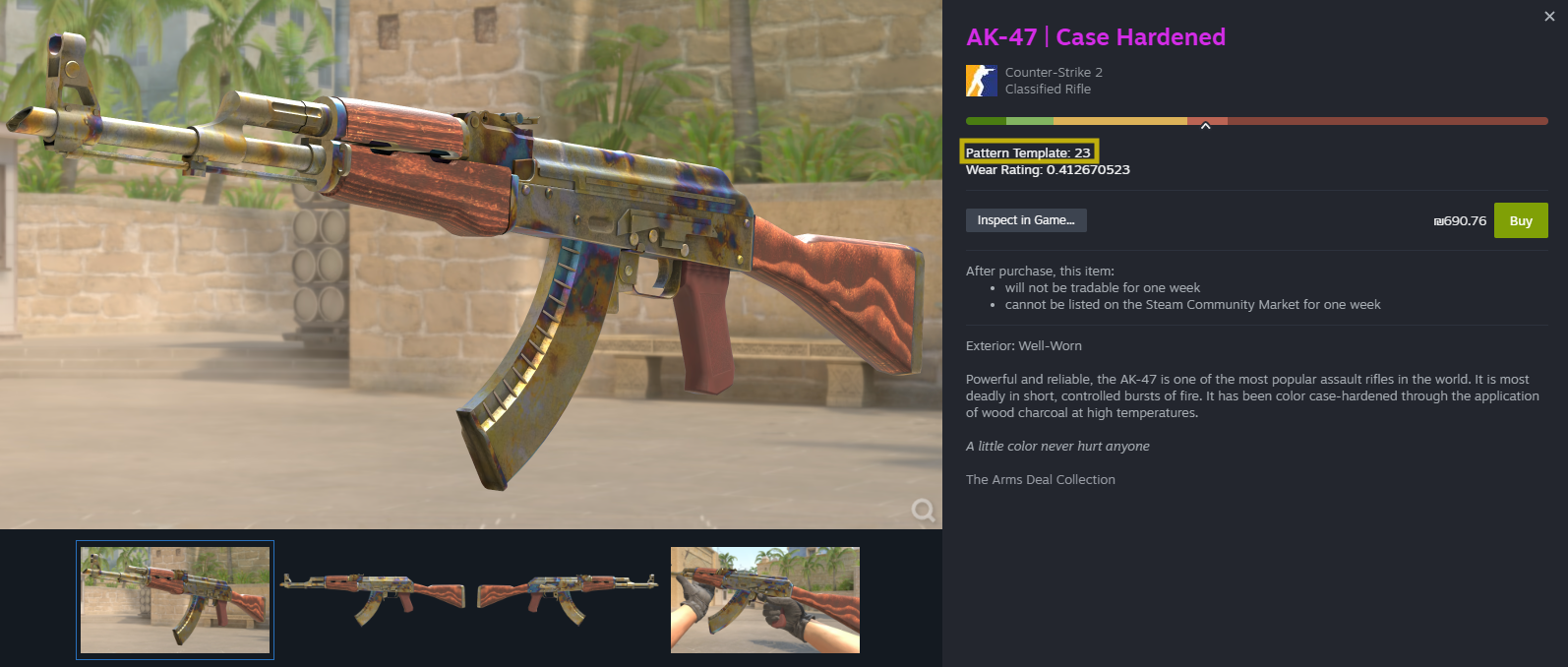
For a knife, check the blade section facing you as well as the opposite side revealed during inspection. For a rifle, look at the receiver and any other patterned surfaces that remain exposed. A striking detail on the hidden side should not outweigh an arrangement you dislike during ordinary play.
If a listing emphasizes a particular color or motif, locate it in the preview and note why you prefer that arrangement. Save the observation beside the seed number. It gives your next comparison a concrete reference instead of leaving you with a number you cannot connect to a visible difference.
Inspect Stickers as Part of the Finished Craft
Read the condition of each sticker, then check its position and orientation on the weapon. Look for a logo covering the artwork you wanted to keep, an uneven arrangement, or scrape damage on the part of an autograph you care about. Evaluate the whole craft rather than the name of its most expensive sticker.
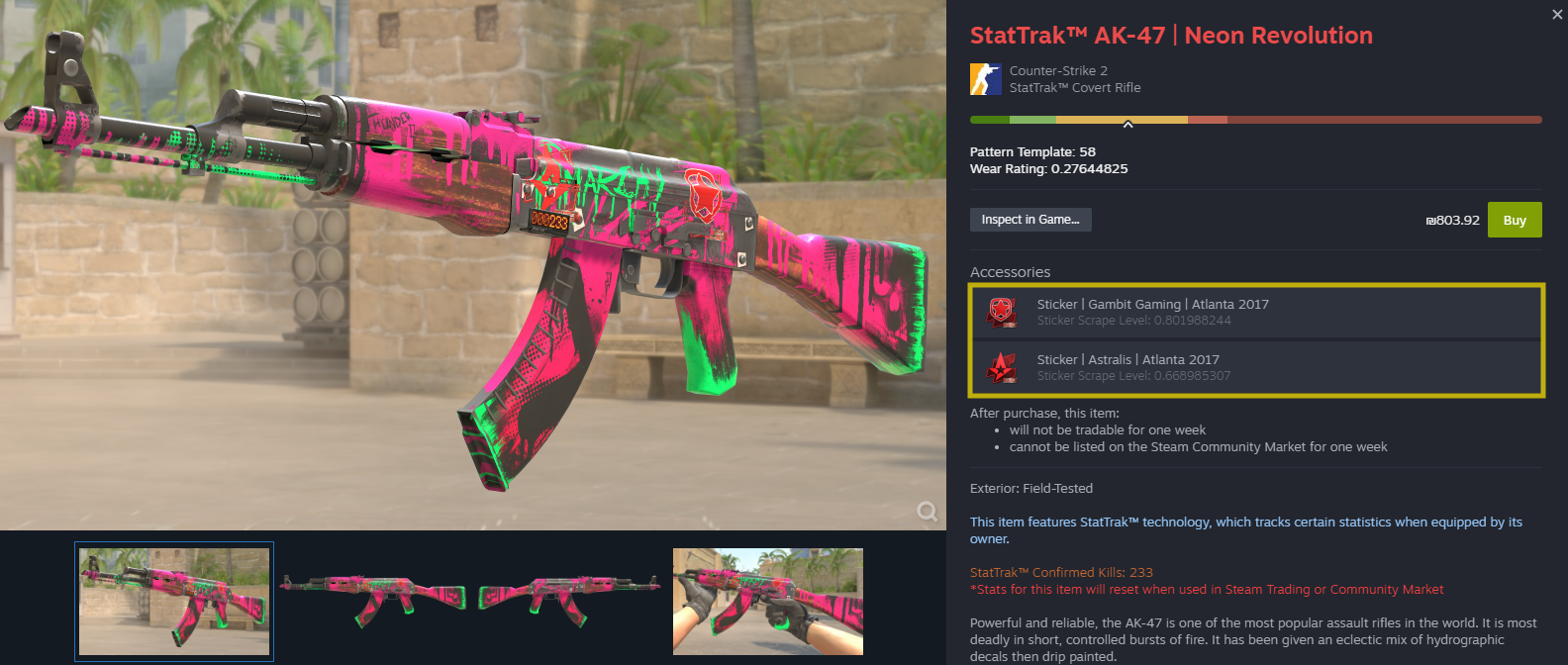
Move between a close view of each sticker and a view of the entire weapon. The close view helps you read damage and placement, while the full view shows how the logos work together. Ask if the craft looks balanced from the side you will actually see, not just from a flattering promotional angle.
For a planned craft, compare the bare finish with the proposed arrangement before committing to the idea. You may prefer the weapon’s original illustration, or discover that one sticker works better than a busier layout. Keep an existing craft’s attached stickers separate from a new combination you are only experimenting with.
Judge the Loadout in One Consistent View
Use your usual graphics settings and viewmodel, and hold the weapon as you would during a round. Compare both candidates in the same bright area and the same shaded area. Change one element at a time, such as the gloves or the weapon finish, so you can identify what improves the combination.
Valve’s Workshop guidance on the player perspective emphasizes the in-hand view and asks for screenshots without post-processing. The large side view used in a showcase can highlight details you barely see while playing.
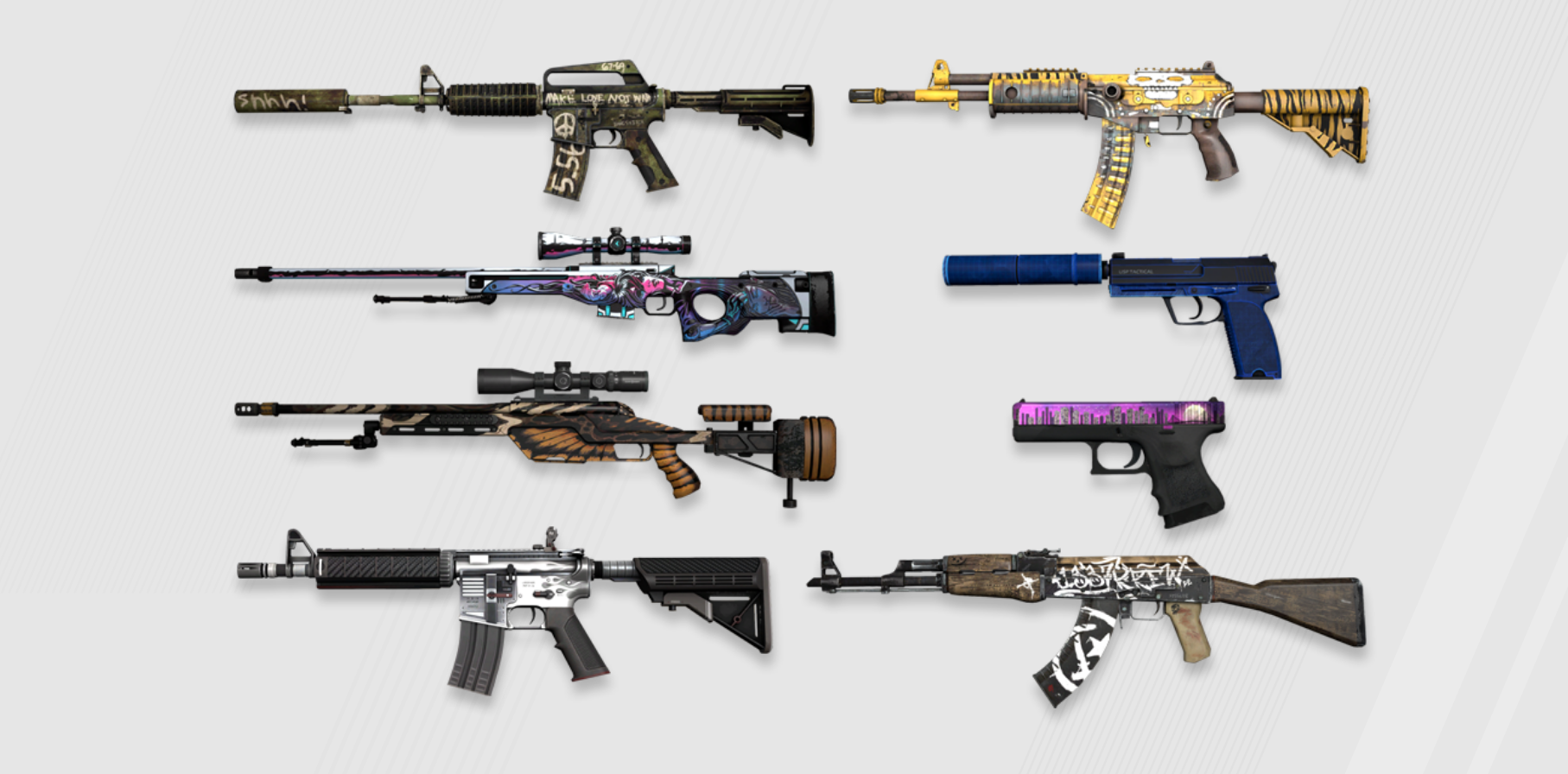
After the still comparison, move around and watch a reload or the weapon’s inspect animation. Notice how the hands cover the design, which parts draw your attention, and how the colors change across those angles. A skin you enjoy seeing in motion can suit your loadout better than one chosen for a single perfect frame.
Open Skinchanger and recreate your shortlisted skin’s finish, float, and pattern with the gloves and stickers you want to compare. Follow the Skinchanger setup guide if you need help configuring the loadout. Selected cosmetics apply only on xplay.gg servers and don't transfer into your Steam inventory or Valve matchmaking.
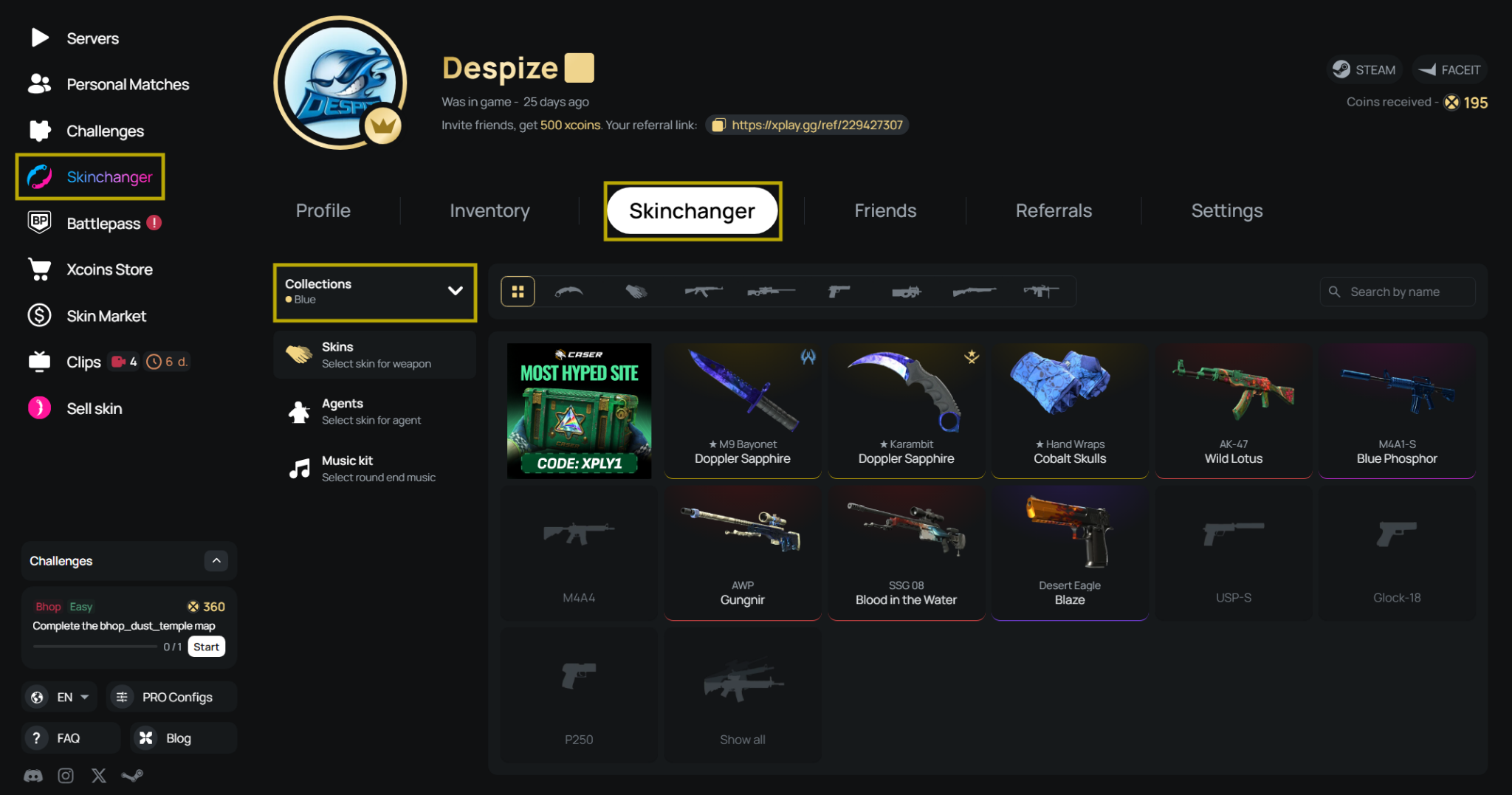
Save a comparison screenshot with the relevant settings or listing details beside it. You can then return to a useful reference after testing another finish, instead of trying to remember how the first option looked.
Choose the Next Step From the Inspection Result
If one copy fails your visual requirement, check another of the same finish. If the design itself keeps disappointing you, change the shortlist. The budget AK-47 skins guide gives rifle options by style and exterior, while the affordable CS2 knife guide helps compare blade models and finishes.
Once a candidate passes the appearance check, use the CS2 skin value guide to compare it with equivalent items. Check completed sales for the same version and condition before accepting a sticker or pattern premium.
Keep the visual decision and the price decision distinct. You can like a particular copy without accepting its asking price, and a cheap listing can still be wrong for the feature you wanted. Compare the final cost on the market you intend to use, including its fees, without assuming prices from different markets are directly interchangeable.
Before paying, match the item selected at checkout to the record you inspected.