
Arena vs Deathmatch vs Duels: Which CS2 Mode Fixes Which Skill?

A common pattern in CS2 is repeating the same warm-up routine after every underwhelming match: queueing Deathmatch, playing a solid 20–30 minutes, feeling a bit more consistent with aim and movement, and then returning to competitive games only to encounter the same lost duels in slightly different situations.
The problem usually isn’t lack of effort or lack of practice time. It’s mismatch between what you’re training and what actually needs fixing.
In this guide, the xplay.gg team will break down Arena, Deathmatch, Duels, and HS Deathmatch as a practical diagnostic system—so you can understand which mode improves aim volume, isolated fights, reaction pressure, crosshair discipline, and match-like decision-making.
Different CS2 Modes Fix Different Mistakes
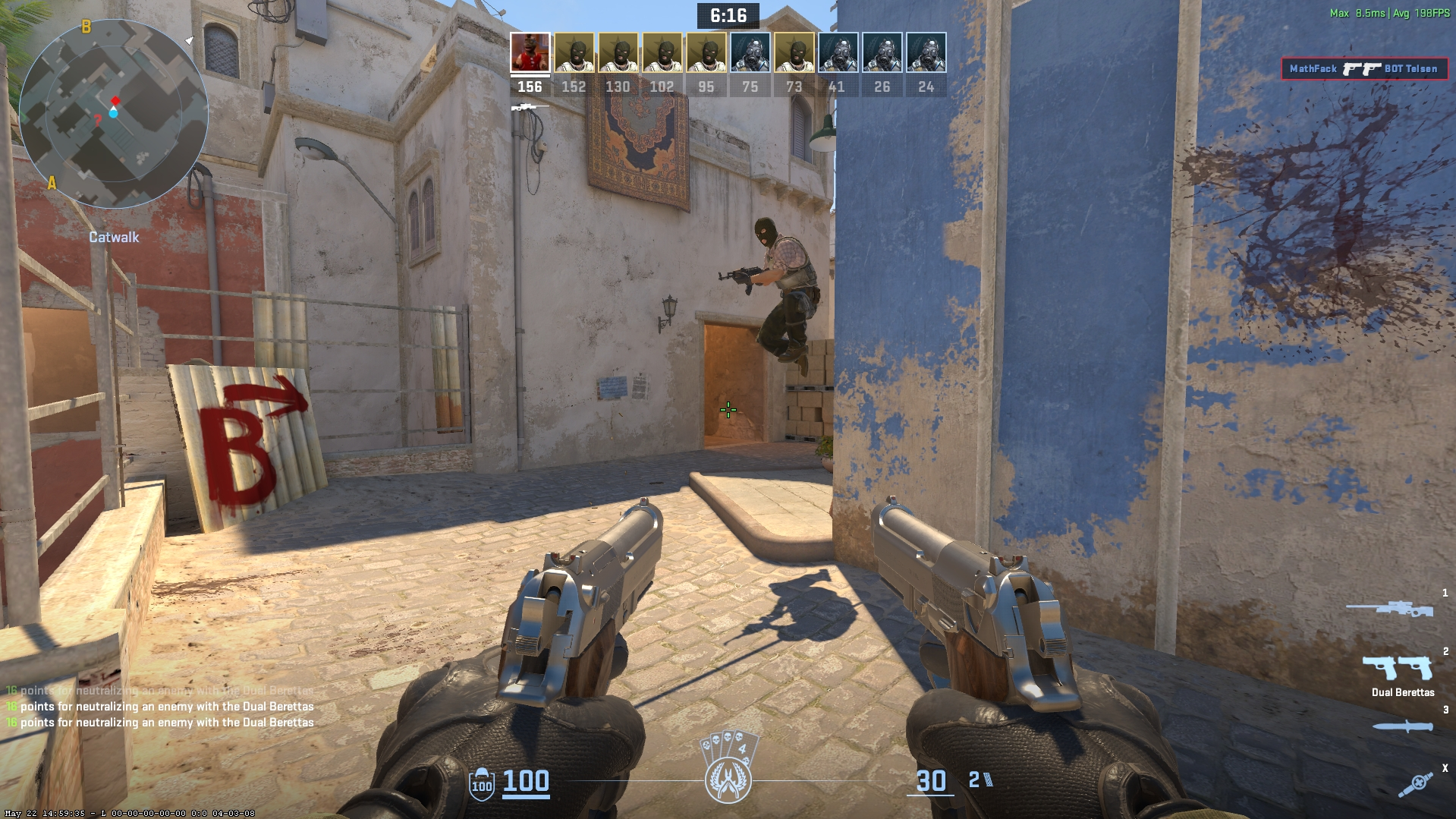
No single CS2 practice mode is designed to solve every skill issue at once. Each one shapes a different part of your gameplay, and treating them as interchangeable is one of the main reasons practice often feels “busy” but not effective.
Deathmatch builds raw engagement volume and general aim consistency. It trains how quickly you can acquire targets, adjust to different angles, and keep your crosshair active under constant respawn pressure.
Arena focuses on fast reaction pressure and repeated re-peeks in short cycles. It trains how you perform forcing quicker decisions, faster crosshair resets, and stronger adaptation to opponents who already expect your position.
Duels isolate 1v1 situations where every fight has weight. This mode trains positioning, timing, and commitment to fights without external chaos. It is especially useful for learning when to take duels, how to swing properly, and how to read a single opponent rather than reacting to multiple threats.
HS Deathmatch removes body-shot comfort and forces strict headshot discipline. It trains crosshair placement at head level, precision under movement, and cleaner first-bullet accuracy.
When these modes are combined instead of used in isolation, practice starts to cover the full spectrum of CS2 mechanics.
Use Deathmatch When You Need Aim Volume and Warm-Up
Deathmatch is the most straightforward way to build raw aim volume in CS2. Because there is no round structure, you get a high number of duels in a short time, which makes it ideal for warming up mechanics before competitive matches.
Best for:
- This mode works best when the goal is to “wake up” your aim—getting comfortable with mouse control, speed, and reacting to multiple enemies without overthinking.
- It also helps stabilize basic consistency when your aim feels off or slow at the start of a session.
However, Deathmatch loses value when it turns into autopilot. Running around without intent, spraying without correcting crosshair placement, or ignoring positioning turns it into repetition without improvement.
Pro tip: Use short, focused Deathmatch blocks instead of long sessions—15–20 minutes with intent is often more effective than extended play.
If you want to understand why server quality matters for aim progression, the xplay.gg team breaks it down in detail in a comparison of the best CS2 Deathmatch servers and what actually affects training speed.
Use Arena When You Need Faster Pressure and More Repetition
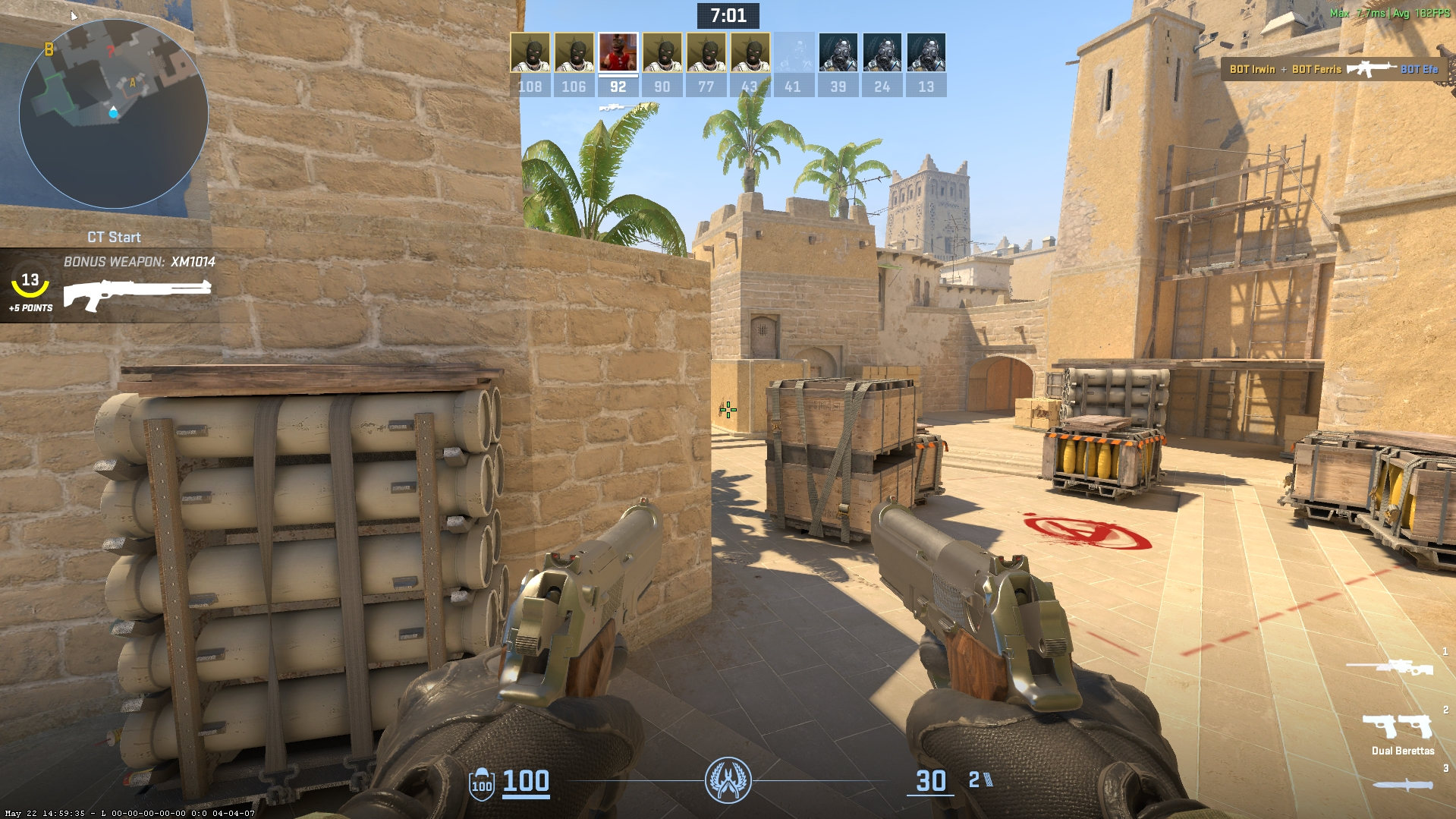
Arena sits between structured aim practice and full Deathmatch chaos.
Best for:
- Fast reaction pressure, rapid re-peeks, and learning to handle back-to-back fights without downtime.
- Arena trains how quickly a player can reset crosshair placement, adjust after each duel, and stay consistent when engagements come in short, intense bursts.
However, Arena is not just about aim speed. It also exposes how quickly a player can recover mentally and mechanically after each duel. If positioning or crosshair discipline is weak, the fast pacing can reinforce mistakes instead of fixing them, because there is less time to reset bad habits between fights.
Pro tip: Use Arena in short, high-focus blocks where the goal is not just winning fights, but resetting correctly after every engagement. On xplay.gg Arena servers, this pressure loop is consistent enough to build real in-game reaction habits without the randomness.
Use Duels When You Need to Fix Isolated Fight Mistakes
Duels are the most direct way to understand what is actually going wrong in your individual fights. Unlike Deathmatch or Arena, there is no chaos, no constant third-party pressure, and no distraction from multiple angles. Every engagement is a clean 1v1, which makes mistakes much easier to identify and correct.
Best for:
- The Duels are especially effective for exposing problems with crosshair placement, timing, peeking discipline, and panic reactions.
- If a player consistently loses “fair” fights in matchmaking, Duels quickly reveal whether the issue comes from swinging too early, holding the wrong angle, aiming too low, or reacting too slowly when contact happens.
For players who regularly lose straightforward 1v1 situations in CS2 matches, the xplay.gg Duels servers provide a controlled environment where those exact mistakes become visible and fixable.
For players struggling with isolated AWP duels, it’s also worth looking at common bad habits that can slow down progress in sniper fights. The xplay.gg team covers this in more detail here: How to Practice AWP in CS2 Without Building Bad Habits. For players who want to go deeper into improving isolated fights: Duels Drills Used by Pros: Micro-Scenarios to Sharpen Aim.
Use HS DM When You Need Headshot Discipline
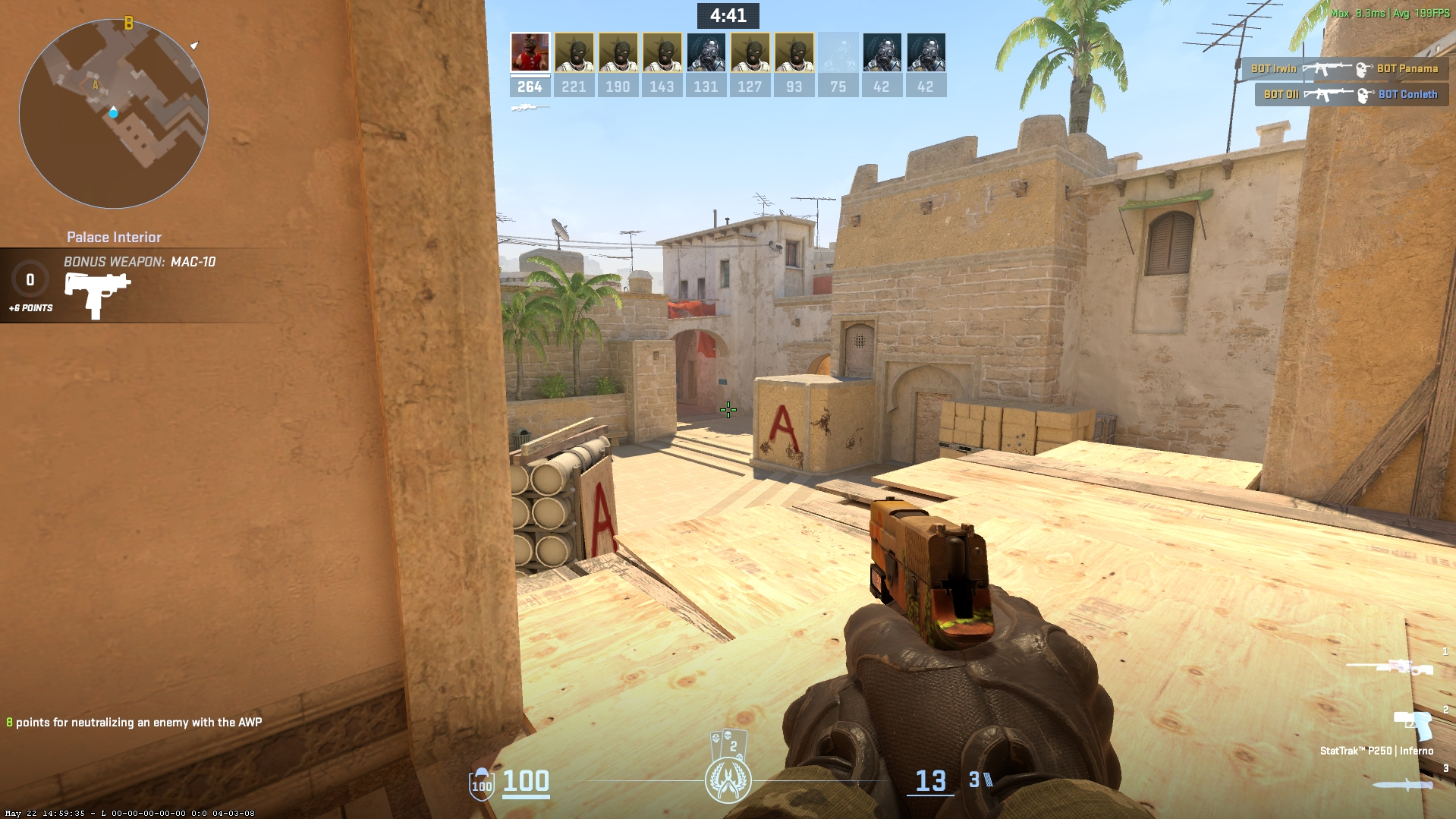
HS Deathmatch removes one of the biggest safety nets in regular aim practice: body shots. Because kills only come through headshots, the mode immediately punishes lazy crosshair placement, rushed sprays, and the habit of correcting aim downward during fights. Every duel forces players to keep their crosshair at proper head level and rely on cleaner first-bullet accuracy instead of damage trading.
Best for:
- The HS DM one of the best tools for developing mechanical discipline. Players quickly notice how often they aim slightly too low, flick too aggressively, or panic spray after missing the opening shot.
For crosshair placement specifically, HS Deathmatch is the most effective mode. Because body shots do not count, players are forced to naturally keep their crosshair at head level instead of correcting aim downward during fights. This makes it one of the fastest ways to build consistent head-height discipline that carries directly into matchmaking.
The best time to switch from regular Deathmatch to HS DM is when basic aim activation already feels stable. Regular DM is better for warming up movement, tracking, and target switching, while HS DM is more effective once the goal becomes precision and consistency at head level. Many players benefit from starting with standard Deathmatch and then transitioning into HS DM to sharpen crosshair discipline before competitive matches.
For players who want to go deeper into headshot training and understand when HSDM becomes more effective than classic DM, there is a full breakdown of how different Deathmatch formats impact improvement speed.
Which xplay.gg Mode Fits Your Problem?
Most players can describe their in-game problem, but not the actual reason behind it. The table below turns common CS2 frustrations into specific training solutions, helping match each weakness with the xplay.gg mode that is most likely to fix it.
Best Practice Before Premier or FACEIT
A good pre-game routine in CS2 is not about playing as much as possible, but about activating the right skills in the right order. Instead of grinding a single mode, a structured short session helps prepare aim, reaction speed, and crosshair discipline at the same time.
A balanced warm-up before Premier or FACEIT can look like this:
30–35 Minute Pre-Match Routine
1. Deathmatch – 10–12 minutes
Focus on raw aim activation. Prioritize fast target switching, clean first bullets, and getting comfortable with mouse control. The goal here is not performance, but readiness.
On xplay.gg Deathmatch servers, this stage is especially effective because constant engagements and fast respawns keep your aim active from the very first minute.
2. Arena – 10–12 minutes
Shift into pressure-based fights. Focus on fast re-peeks, quick resets after each duel, and maintaining consistency when engagements come in rapid sequence. This bridges the gap between warm-up and real match intensity.
xplay.gg Arena servers are built for this type of repeated pressure loop, making it easier to simulate match-like fight tempo without waiting for full rounds.
3. HS Deathmatch OR Duels – 10–12 minutes
Finish with precision or isolated fights depending on your main weakness.
- HS DM for strict headshot discipline and crosshair placement
- Duels for controlled 1v1 decision-making and timing
Both xplay.gg HS DM and Duels servers are useful here, depending on whether the goal is mechanical precision or isolated fight consistency.
FAQ
What is the Best CS2 Mode for Aim Training?
There is no single “best” mode for everything, but Deathmatch is the strongest for raw aim volume and general mechanical activation. For precision and head-level consistency, HS Deathmatch is more effective, while Arena and Duels cover pressure and isolated fight scenarios.
Should I Play Deathmatch Before Premier or FACEIT?
Yes, but it should only be the first step of a short warm-up. Deathmatch is ideal for activating aim and getting comfortable with movement and target switching. However, it works best when combined with Arena and HS Deathmatch rather than used alone.
Is Arena Better Than Deathmatch for Improving Aim?
Not directly. Arena is not about raw aim volume, but about pressure handling and fast engagement cycles. Deathmatch is better for aim repetition, while Arena is better for reaction speed and fight recovery under stress.
When Should I Switch from Deathmatch to HS Deathmatch?
You should switch once your aim feels “awake” and stable. Deathmatch is better for warming up tracking and movement, while HS Deathmatch is more useful when the goal is strict headshot discipline and crosshair placement refinement.