
How to Build a Weekly CS2 Practice Plan Without Burning Out

A good CS2 practice plan is not “play Deathmatch every day until you become better.” That usually turns into autopilot: you shoot more, tilt more, and still lose the same post-plants, trade fights, pistol rounds, or team rounds in Premier and FACEIT.
A better weekly routine starts with one question: what exact in-game mistake do you need to fix this week?
If your stack needs a private lobby with adjustable rules, create a Personal Match. If your team keeps losing post-plants, go into Retake. If your aim feels bad, start with Deathmatch. If you struggle to land headshots, switch to HS DM. If your duo fails to trade, train together in 2x2.
This guide shows how to build a weekly CS2 practice plan using xplay.gg community server modes that improve your skill without burning you out. If you are new to custom servers, start with our guide on how to play CS2 community servers before choosing your weekly routine.
A Weekly CS2 Practice Plan Should Rotate Skills
The biggest mistake players make is choosing a server before choosing a goal.
You join Deathmatch because it is familiar. Then you play Retake because it feels useful. Then you queue Premier while already tired and hope the training somehow transfers into better rounds.
That is backwards. A good CS2 routine starts with the problem you need to work with.
The xplay.gg servers works best when you need to isolate one CS2 situation without waiting for matchmaking to randomly create the same round again.
Mechanics Days Should Be Short and Focused
A mechanics day should improve your aim without draining you before you queue. It should focus on one clear skill: aim rhythm, headshot discipline, pistol confidence, first bullet accuracy, or clean strafing.
The xplay platform has three modes for this part of the routine: Deathmatch, HS DM, and Pistol DM. Treat them as short pre-match training, not endless grind servers.
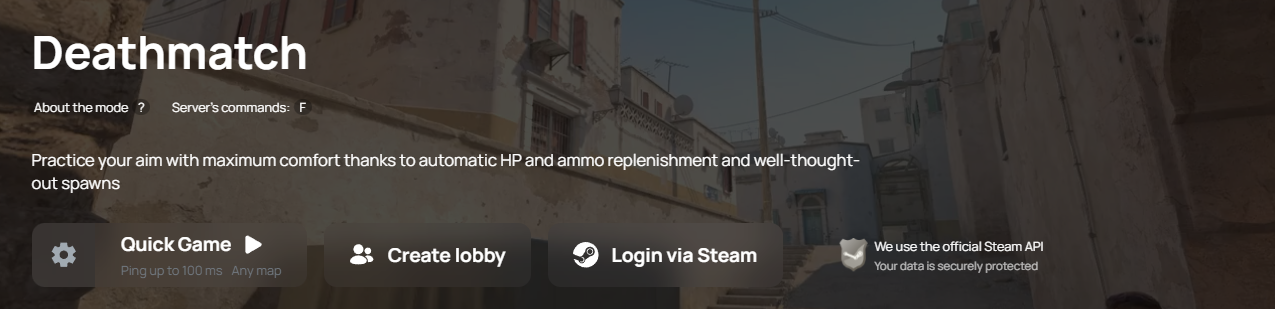
Deathmatch fits best when you are tired of shooting bots and want a more realistic warm-up against moving players. It lets you take rifle fights from spawn to spawn without waiting through freeze time, saves, or full rounds.
- Play 10 minutes of Deathmatch. Use AK-47 or M4A4 only. Do not crouch-spray. Stop before every shot, try to kill the enemy with only one shot, and leave the server once you catch yourself wide-swinging or spraying on autopilot.
Your goal in Deathmatch is not to top the scoreboard. Focus on crosshair placement, first bullet accuracy, and clean movement with strafes. Once your aim and reaction feel normal, move to another training mode or go into Premier / FACEIT while you are still fresh.
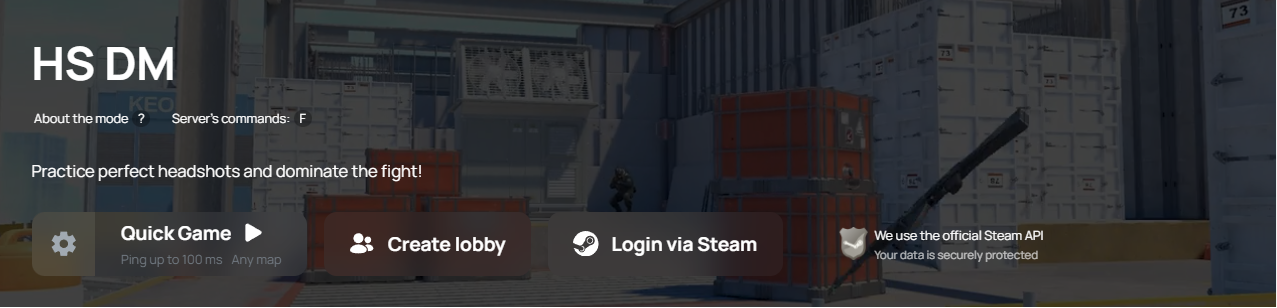
HS DM is the right choice when your aim feels messy, your crosshair keeps dropping, or you hold the spray for too long instead of landing clean headshots. On HS DM servers, you have to aim for the head — otherwise, you will not win the fight.
- Add 10 minutes of HS DM if you hit more body shots than headshots. Try to keep your crosshair at head level, and avoid long sprays. If you miss the first bullet, reset your movement and take the fight again instead of dragging the spray into the body.
This mode improves the way you shoot for a huge amount. For example, if you peek short on Mirage while holding your crosshair too low and lose to a player who is already holding head level, HS DM is the right place to fix that habit.
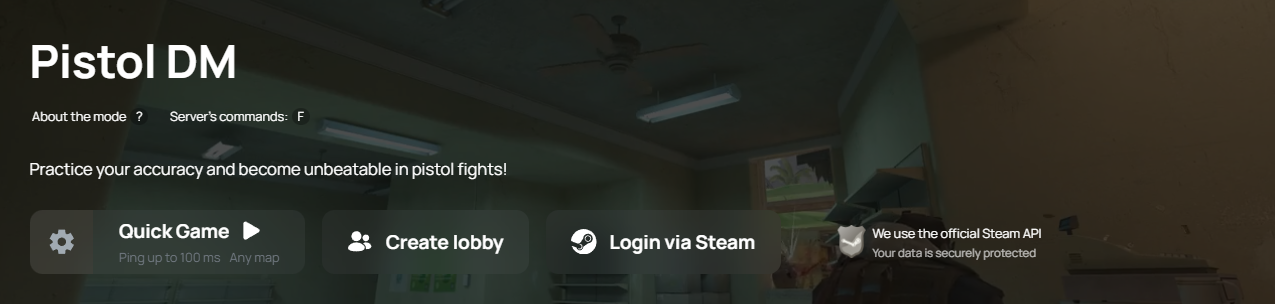
Pistol DM belongs to the routine when pistol rounds feel uncomfortable. Maybe you miss many shots using pistol, lose control in close fights, or struggle with a specific pistol.
- Add a short Pistol DM block only if pistol rounds are your current weakness. Work on clean movement, slower shots, and first-bullet accuracy with pistols before going into matchmaking.
This mode helps you step up with the USP-S, Glock-18, Desert Eagle, and other pistols at different distances. It is especially useful for pistol rounds, eco rounds, force-buys, and AWP players who need reliable pistol aim when they miss a shot or get pressured up close.
A good mechanics session should be short. For most players, 20–30 minutes is enough. Example routine:
- Play 10 minutes of Deathmatch. Stick to AK-47 or M4A4, stop before shooting, and focus on clean first bullets instead of chasing the scoreboard.
- Focus on crosshair placement, first bullet accuracy, and proper strafing. Keep your crosshair at head level, avoid crouch-spraying, and reset your movement before each fight.
- Add 10 minutes of HS DM if your crosshair keeps dropping. Use this mode only when you are landing too many body shots or holding sprays too long.
- Add a short Pistol DM block only if pistol rounds are your current weakness. Train slower shots, controlled movement, and reliable pistol aim for pistol rounds, eco rounds, and force-buys.
- Stop before you feel tired. If you start rushing every fight, missing easy shots, or getting tilted after every death, the mechanics session is done.
Playing more at that point usually does not make your aim better. It only makes you tired and hurts the matches that matter. If you want a separate pre-match routine before, use our CS2 Premier warm-up routine before building the full weekly plan.
Scenario Days Should Train Real Round Decisions
Scenario days are where mechanics start turning into real CS2 decisions. Aim training helps you feel sharper, but you still need pressure: post-plants, isolated fights, trade timing, and site control.
This is where Retake, Duels, 2x2, and Arena fit into the weekly plan.
Retake is the right server when your main problem happens after the bomb is planted: bad site holds, weak CT entries, poor crossfires, or panic peeks.
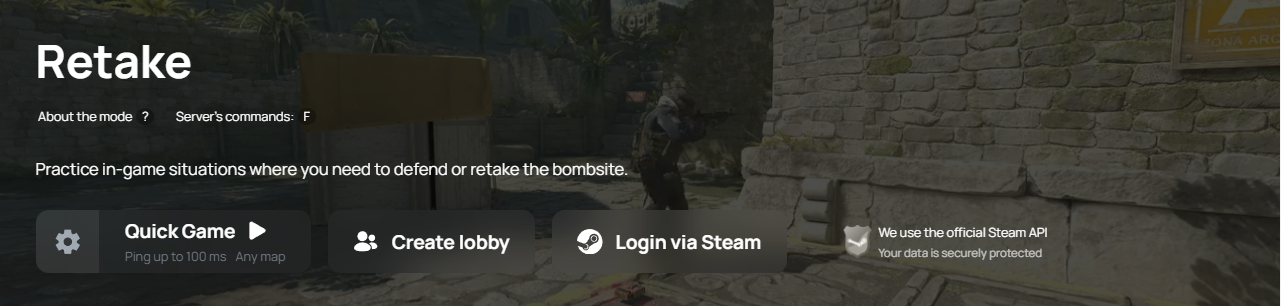
For example, if you keep losing Mirage A post-plant rounds because you do not know which angle to hold or your team keeps peeking CT one by one, more Deathmatch will not fix the problem. You need a CS2 Retake server where the bomb is already planted, the timer is running, and you can work on the same post-plant setup until your positioning, timing, and site-hold decisions improve.
- Go into Retake and focus on only two scenarios for 15 minutes. Do not try to fix every post-plant mistake at once. Focus on one T-side situation and one CT-side situation.
For the T side, work on attacking the A site from different positions: Pit, Palace, Connector, Jungle, or CT spawn. Learn how to check enemy positions, take smart peeks, and throw utility before fighting instead of dry-swinging every angle.
For the CT side, take strong positions that cover one A-site entrance and help create crossfires with your teammates. For example, throw a Molotov into Pit early to slow down a push, smoke Palace to block vision, then move into a safe position where you can support your team and punish the next peek.
For utility-specific post-plant work, pair this section with our Retake grenade lineups for Mirage, Inferno, and Ancient.
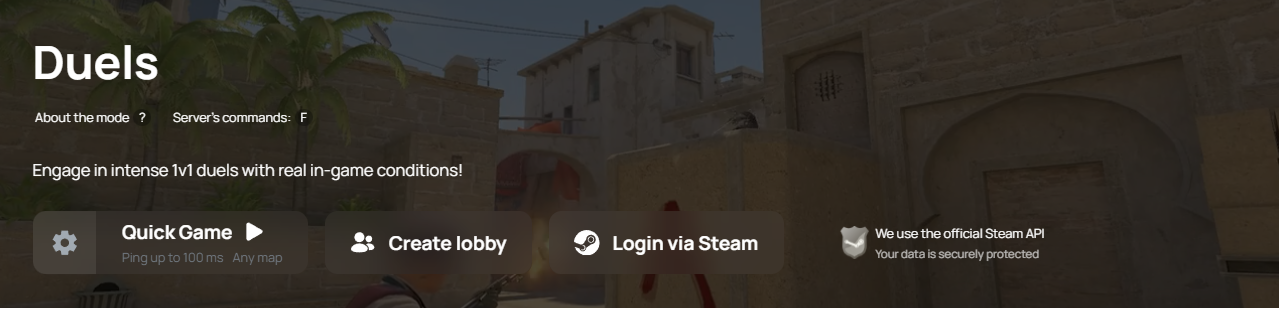
Duels are for clean first-contact fights where the mistake is easy to isolate: late counter-strafing, bad pre-aim, predictable timing, or missing the headshot.
Imagine you keep fighting for Ancient mid and losing the opening duel because your timing is late, your pre-aim is off, or you simply don't know the enemy’s common positions. They see you first, place the crosshair on your head faster, and punish you before you can adjust.
- Fix your counter-strafe before thinking about aim. Do not shoot while moving. Peek, stop with the opposite movement key, then shoot.
- Pre-aim common head positions before you swing. Place your crosshair where the enemy’s head should be, not in the middle of the wall or at chest level.
- Review why you lost the duel before repeating it. Ask yourself: was my counter-strafe late, was my crosshair too low, did I swing too wide, or did I miss the enemy’s common position?
Matchmaking won't give you enough controlled reps of that exact opening fight. Duels will.
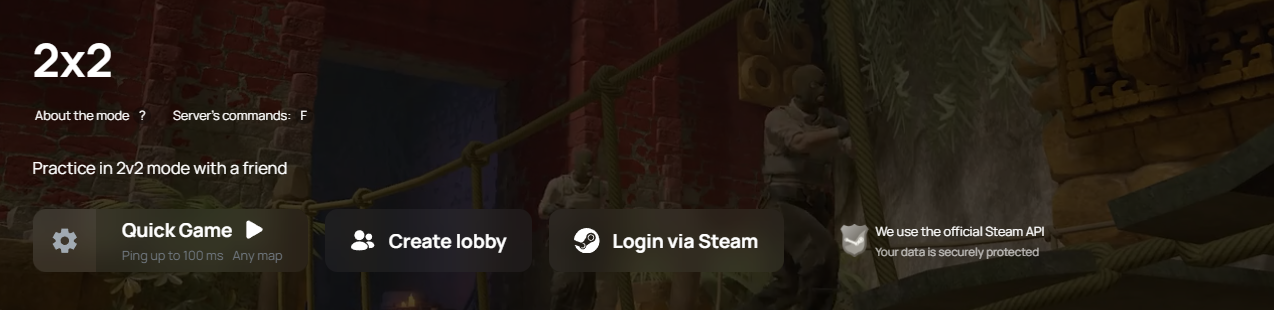
2x2 works best when you and one teammate are close on the map but still fail to play as a pair. Many players think they have a communication problem, but the real issue is often spacing.
Example: you and your teammate want to push Dust 2 A-site from two sides at the same time — one through Short and one through Long. Your teammate gets the first kill on Short and tries to take the site, but the second CT kills him from CT spawn. You are still sitting in Long Pit with no trade angle, so the fight turns into a free 1v1 for the defender.
In reality, your spacing and synchronization were wrong before the fight even started. That is exactly what 2x2 helps you to fix.
- Set one timing rule before the round starts. Decide if you swing together on a countdown, after contact, or after one player throws utility.
- Stay close enough to trade the first death. If one player fights Short while the other is still stuck in Long Pit, the defender gets a free 1v1 instead of a real trade.
- Review the failed push together. After each attempt, check one thing: could the second player trade the first death? If not, fix the distance, timing, or angle before trying again.
The goal is to turn two separate solo fights into one coordinated attack.
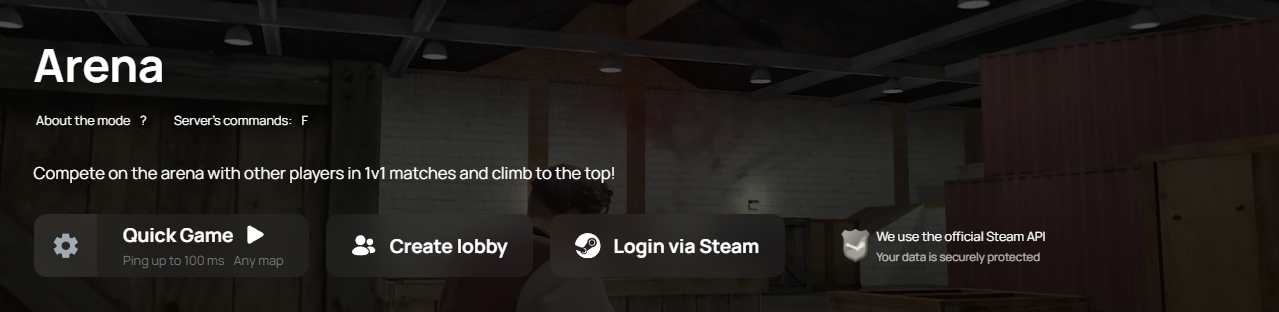
Arena sits between Deathmatch and Duels: less random than spawn-to-spawn fights, but less predictable than a pure 1v1.
Example: you keep losing mid-round fights on Mirage because enemies can appear from several angles. In Deathmatch, the fights feel random because players spawn everywhere and often lack structure. In Duels, each fight is too isolated: you know there is only one enemy, so you can focus entirely on that duel without worrying about getting shot from behind.
- Train fights with changing angles in Arena. Pick a map where you often lose mid-round duels, like Mirage, and focus on opponents appearing from Connector, Short, Window, or Top Mid.
- Clear one angle before moving to the next. Do not swing into open space with your crosshair floating. Check one position, reset your crosshair to head level, then move to the next angle.
- Reset after every contact. If you miss or kill the first opponent, stop moving, place your crosshair again, and take the next fight cleanly instead of rushing forward.
Arena gives you more variety than Duels and less randomness than Deathmatch. It is best for clearing angles, adjusting your crosshair, and reacting to opponents appearing from different positions on real CS2 maps.
Team Days Should Use Personal Matches or 5x5
A five-player stack can have strong individual players and still lose because the round has no shared plan. One player throws utility too late, the entry goes before the flash, the lurker pushes at the wrong timing, and nobody knows whether to follow the IGL call or make their own move.
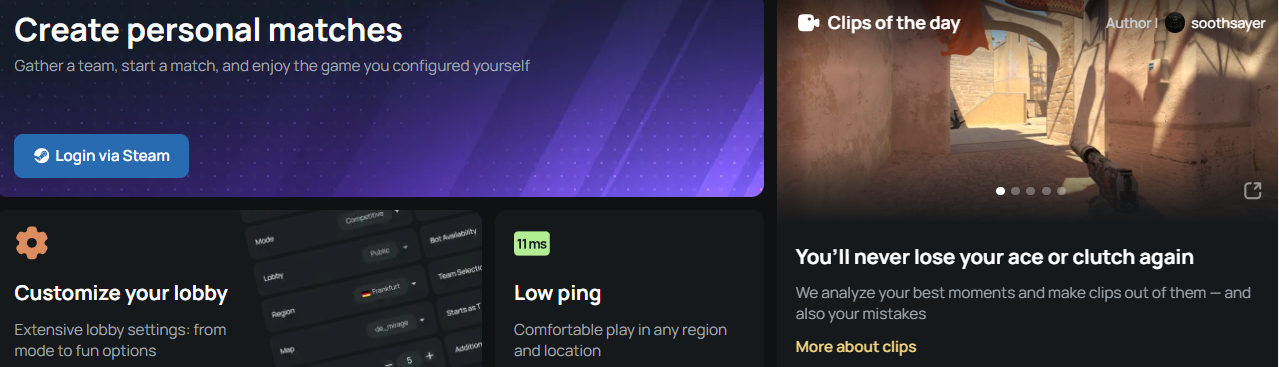
On xplay.gg, the difference between Personal Matches and 5x5 comes down to customization versus structure. Personal Matches are for controlled team drills: private lobbies, adjustable rules, and clean rehearsal of executes, retakes, or utility setups. 5x5 is better when your stack needs a standard competitive environment.
If your stack keeps failing the same Inferno B execute, missing grenade lineups, or arguing over who should go first, playing five more random Premier games will not solve it. Personal Matches let your team recreate the same situation with utility timing, entry path, and post-plant positions, so the round starts to feel organized and every player knows their job.
Play one or several Personal Matches to remove confusion from your team setup.
- Choose one caller before the practice starts. Agree whose plan the team will follow. This prevents five players from making five different decisions in the same round.
- Discuss how you want to take Inferno B site. Decide which angles each player should clear, who throws each grenade, where and when the utility should land, who enters first, and who is ready to smoke off a Molotov if the enemy blocks your Banana push.
- Run the B-site push several times. Keep the same setup until every player understands their role, timing, utility, entry path, and post-plant position.
5x5 fits a different problem. It is useful when your stack understands the tactic in theory, but struggles to apply it once the round becomes chaotic.
Example: your IGL calls a slow Mirage default. One player pushes early without information, the support player flashes too late, and the AWP rotates before your team has map control. The problem is not one missed shot. The problem is that the team stopped following the round plan.
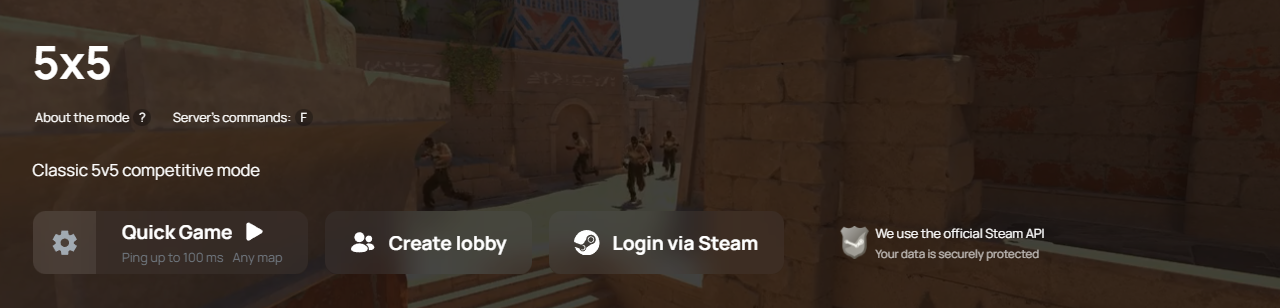
Go into 5x5 with one team focus for the session.
- Choose one team problem before the match. For example: “Today we follow the IGL call after first contact” or “Today we work on trading after the entry dies.”
- Assign roles before the match starts. Decide who goes first, who supports, who lurks, who calls, who holds the flank, and who plays with AWP.
- Play full rounds without changing the goal. Don't treat the session like random matchmaking. Even if you lose rounds, keep tracking the same team habit.
- Review only the repeated team mistakes. Ask simple questions: did we trade? Did we follow the call? Did the utility land before the entry? Did everyone know their post-plant role?
Overall, 5x5 is best for practicing under standard competitive rules. It helps your stack improve as a team, not just as five solo players sharing the same server.
If your stack needs a private lobby first, use our guide on setting up Personal Matches and custom games in CS2.
Recovery Days Make Practice More Consistent
Recovery days prevent tilt, fatigue, and autopilot habits. If your aim gets worse during the session, your focus drops, or you keep queueing while tilted, another hard practice day will probably make the week worse.
A recovery day does not always mean leaving CS2 completely. You can play Public, Surf, or another low-pressure mode if you still want to stay in the game without turning the day into another serious session.
Your physical condition also affects your aim, reaction time, and decision-making. Poor sleep, alcohol, dehydration, or skipped meals can make your crosshair feel shaky and your reactions slower, even if your mechanics are usually solid. Treat recovery as part of the practice plan, not as time wasted.
Use a recovery day when:
- Your shots stop landing.
- You keep wide-swinging or panic spraying.
- You repeat Deathmatch without a goal.
- You feel annoyed before the session even starts.
- You are playing more but fixing fewer mistakes.
If you still want to improve that day, watch a pro player’s stream on Twitch or Kick instead of forcing another match. Pay attention to their crosshair placement, counter-strafing, peek timing, utility usage, and how they clear common angles. If you notice the same weakness in your own games, make it the focus of your next training session.
Build Your Weekly CS2 Practice Plan Around One Clear Goal
A good CS2 practice plan should make your sessions more focused, not longer. Instead of switching randomly between servers, start each day with one clear question: what mistake from my last match do I want to fix today?
If your aim feels cold, start with Deathmatch. If your crosshair keeps dropping, switch to HS DM. If you lose post-plants or struggle with site positions, go into Retake. If your duo fails to trade, work together in 2x2. If your stack needs full-round structure, play 5x5. If your team needs to drill one execute, retake, or utility setup, create Personal Matches.
The goal is not to fix everything in one session. Rotate skills across the week, keep mechanics days short, use scenario days for real round decisions, and give your team separate time for structure.
Most importantly, do not ignore recovery. If your aim gets worse, your focus drops, or you keep queueing while tilted, better take a nap. A sustainable weekly CS2 routine should help you come back sharper, not make every session feel like a grind.
Pick one xplay.gg mode for today’s training goal. Build the week around real mistakes, work on the right situations, and your sessions will start turning into better decisions in real matches.