
Is CS2 128 Tick? Tick Rate System Explained

CS2's tick rate is an important parameter determining how often the game updates its state. Currently, CS2 runs with an official server tick rate of 64 Hz, which means 64 updates per second. However, players often argue about the benefits of a higher tick rate, such as 128 Hz, and wonder why Valve won't update servers to 128 ticks.
In this guide, we’ll break down how CS2 tick rate actually works, what the subtick system does, how it compares to CS:GO, and whether 128-tick servers are still relevant in 2026.
Highlights
- An explanation of what a tick rate is
- How the CS2 subtick system works under the hood
- CS2 vs CS:GO tick rate comparison (64 vs 128)
- Why Valve moved away from 128-tick servers
- Feedback from community and professional players on the new system
What is a Tick Rate?
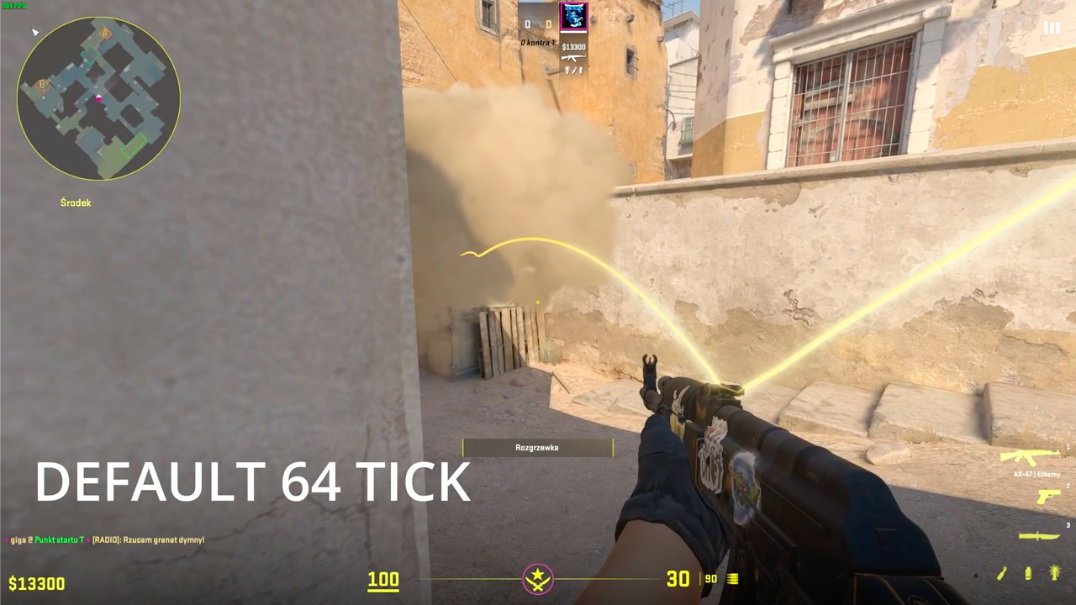
Tick rate is the frequency at which the server updates game data. Frequency is measured in hertz (Hz). The higher the tick rate value, the faster the player receives input updates from the server, making the online game more responsive and realistic for the player.
For example:
- 64 tick = 64 updates per second
- 128 tick = 128 updates per second
Higher tick rates traditionally meant:
- more responsive gameplay
- better hit registration
- more accurate movement
Valve's official matchmaking servers update 64 times per second and send this information to players. Third-party services provide access to servers with double the refresh rate of 128 times per second. These are the two central values of tick rate.
For players looking for more flexibility than standard matchmaking offers, xplay.gg provides additional server options and game modes that help bridge the gap between casual play and competitive practice.
Importance of Tick Rate in Competitive Gaming
Tick rate determines the delay a player experiences in acting out a game. For example, a defender in position may swear that he shot at an opponent who was peeking but was still knocked out. This could be due to the low server tick rate. While this annoys regular players, it can be a bigger problem for professional players in a competitive environment.
How the Subtick System Works in CS2
This is where things get interesting.
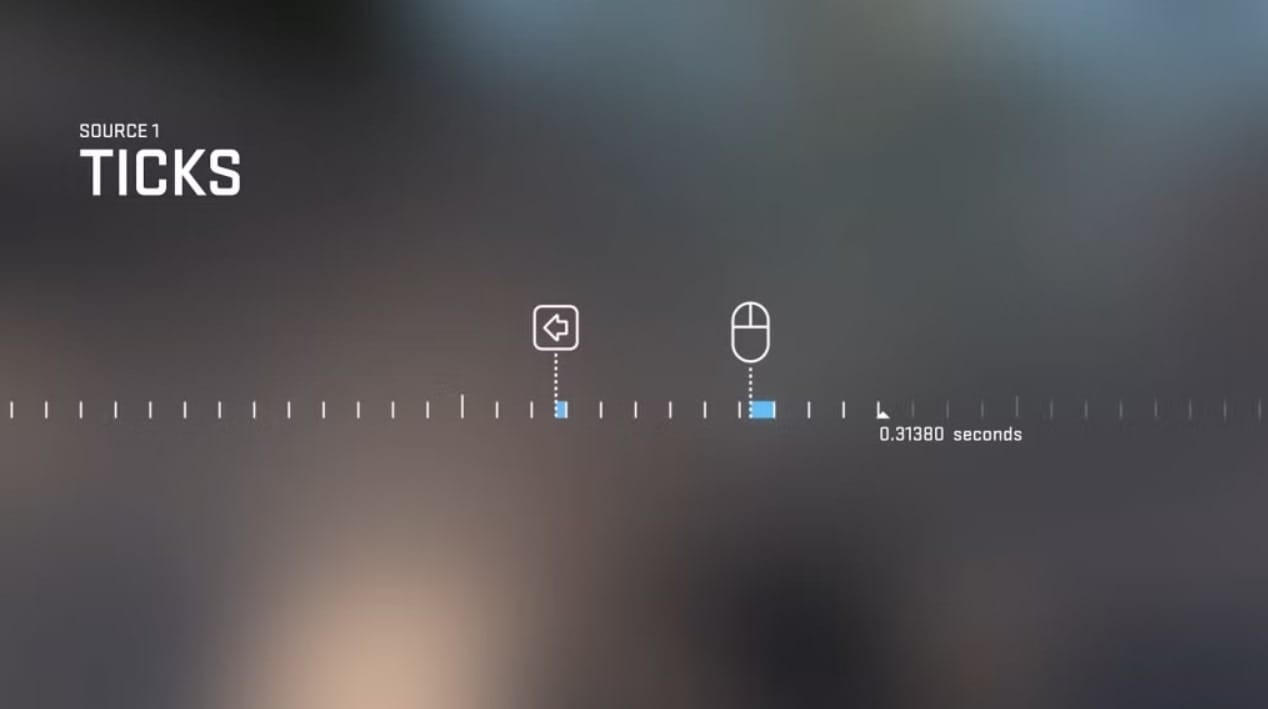
CS2 still runs on 64 Hz servers, but instead of relying only on ticks, the game uses a subtick system that records the exact moment of your action — even between ticks.
This means:
- your shot is registered at the precise time you click
- movement inputs are tracked more accurately
- grenade throws feel more consistent
Instead of “waiting for the next tick,” the server now knows exactly when something happened within that tick.
Valve made a separate video explaining what subticks mean in CS2. The video clearly shows the problem that the new tick rate system solves.
(129) Counter-Strike 2: Moving Beyond Tick Rate - YouTube
Substicks attach timestamps to player actions and send this information to the server. This allows the server to accurately process the sequence of each player's actions and update the game state accordingly.
On Reddit, many fans have been doing their research on the new system.
CS2 Tick Rate vs CS:GO Tick Rate
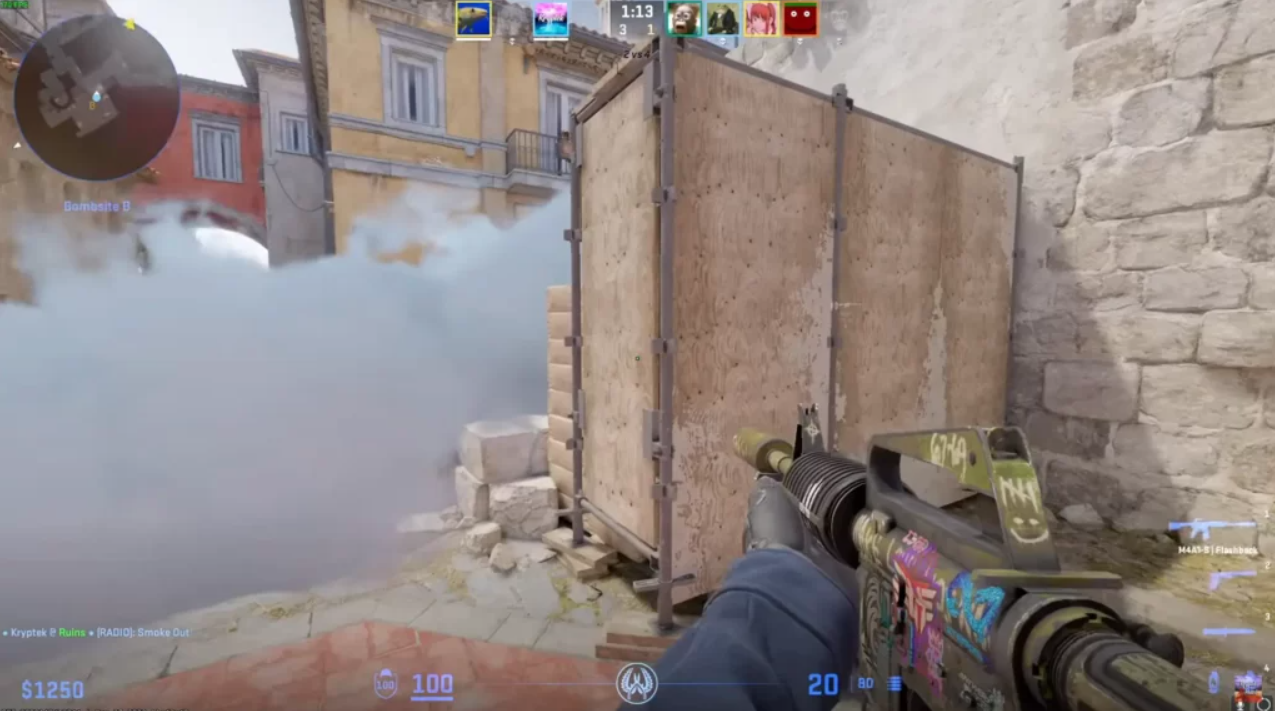
To really understand why tick rate debates still exist in CS2, you need to look at how things worked in CS:GO — and what exactly changed. In CS:GO, everything was tied directly to server tick rate.
- 64-tick servers (official matchmaking) updated the game 64 times per second
- 128-tick servers (FACEIT, ESEA) updated it 128 times per second
This meant your actions — shooting, movement, peeking — were only processed on each tick. If you clicked between ticks, your input had to “wait” until the next update.
In practice, this created small but noticeable delays:
- shots could feel slightly behind your crosshair
- fast peeks were less accurate on 64 tick
- spray control felt less consistent
That’s why competitive players strongly preferred 128-tick servers — they reduced the gap between your input and the server response.
CS2, however, takes a completely different approach. At first glance, nothing has changed — official servers still run at 64 Hz. But the key difference is that the game no longer relies purely on ticks to register your actions. Instead, it uses the subtick system, which tracks the exact timing of every input.
In practical terms, this means your actions are no longer locked to fixed server intervals. When you shoot, move, or throw a grenade, the game records the precise moment it happens, even if it occurs between ticks. The server then processes this information with exact timestamps, reconstructing the correct order of events.
Because of this, the traditional advantage of 128-tick servers is no longer as clear-cut. In theory, a 64-tick server with subtick can deliver a level of responsiveness comparable to — or in some situations even better than — the old 128-tick model. Your shots are registered based on when you actually clicked, not when the next tick happens.
That said, player perception still varies. Many players agree that CS2 feels better than 64-tick CS:GO, especially in terms of hit registration. At the same time, some experienced players still feel that it doesn’t fully match the consistency of 128-tick servers, particularly in fast-paced scenarios.
Valve’s Position on 128 Tick
Valve has been consistent in their approach: instead of increasing tick rate, they focus on improving how the game processes inputs.
One of the key ideas behind this philosophy was previously voiced by Valve developer John McDonald: “We are not going to add 128 tickrate because of players with low-end PCs.”
While this quote dates back to CS:GO, the direction remains the same in CS2 — optimize the system for everyone, rather than raising hardware and server requirements.
As of now, Valve does not plan to introduce 128-tick servers into official matchmaking in CS2.
How Does the Subrick System on Movement and Shooting Accuracy
Before this update, shots were registered immediately, but the animation of character and weapon movements lagged by one tick, making them visible only on the next frame. This gave the impression of unnatural shooting in CS2, especially for headshots whose aim didn't match the point of impact.
But now, while shots still register instantly, character and weapon movement animations are visually synchronized with your clicks and shots. This dramatically improves the visual experience, making the whole picture smoother.
What's more, it's a vast improvement: finally, what you see matches reality. Every weapon now seems more accurate. The changes are especially noticeable when using the AWP and USP in pistol rounds, especially when shooting at moving targets.
You can see a practical application of this update in this video on Reddit.
Why CS2 Can Still Feel Laggy
It’s important to understand that subtick is not a magic solution that removes all forms of lag — it only improves how player inputs are registered on the server. If the game feels off, the issue is often:
- high ping
- packet loss
- unstable internet connection
- low FPS.
If your game still feels inconsistent, it may not be about tick rate at all — issues like FPS drops or unstable settings can play a much bigger role. We’ve covered this in detail in our guide on Best CS2 Settings for Max FPS, where we break down how to stabilize performance and reduce input delay.
That’s why players should focus on:
- stable internet connection
- low latency
- consistent FPS
Many players confuse network issues with server-side problems. In reality, things like packet loss and unstable connection are often the real cause behind “laggy” gameplay. You can learn how to diagnose and fix these problems in our article CS2 Lag, Packet Loss & Hit-Registration: Practical Fixes.
To better diagnose performance issues, players can use a built-in console command: cq_netgraph 1. This command displays a hidden network graph that helps you monitor important connection metrics such as ping, packet loss, and server stability in real time.
Community and Professional Opinions
Reactions from the CS2 Community
The subtiсk system caused different reactions among players; some liked and benefited from the update, and some just criticized it. However, some suggested some improvements to the system.
Various user studies have shown that CS2 sends twice as much data to the server as CS:GO. This is achieved by sending two packets: large packets, which are sent every 15-16 milliseconds, and small packets, which follow the large ones with minimal delay. The small packets are supposed to contain the most critical information, while the large packets contain additional data needed to update the game state.
A user with the nickname carnifexCSGO shared a detailed post on Reddit back in 2023, exploring early concerns and potential issues with the new subtick system shortly after CS2’s release.
If you want to consistently improve your mechanics, platforms like xplay.gg offer a variety of custom servers and modes where you can practice aim, movement, and utility without the pressure of competitive matchmaking.
Professional Player Insights
Early feedback from professional players played a big role in shaping how the community perceived the subtick system after CS2’s release.
Back in 2023, Robin “ropz” Kool from FaZe Clan shared his first impressions:
“Subtic could be better than described. There is a difference between 64 and 128. That's the only thing that feels bad. It could be tweaked; it feels more like 64 than 128. The rest of the update is fantastic.
I hate to criticize this because it feels like Valve is trying to address the tick rate issue, but raising 128 as the norm would be the answer. But who knows, this path will be much better in a few years, and I'll be proven wrong.”
In 2024, Ricky “floppy” Kemery from Complexity Gaming also pointed out inconsistencies: “Feels like some delay between the headshot animation and the body falling… shouldn't feel like this.”
In the video, the professional player demonstrated that the game scored an opponent's kill much faster in the last version of the shooter.
Since then, Valve has continued refining the subtick system, and by 2026 the overall experience has noticeably improved. However, the discussion hasn’t disappeared entirely.
Even with these improvements, some players have reported lingering issues:
- inconsistent hit registration — while subtick increases accuracy, some players still notice occasional mismatches during fast engagements
- increased server load — processing subtick data requires more resources, which in some cases can lead to stuttering or lag during intense matches
So while the system is clearly more advanced than what CS:GO offered, it’s still evolving — and the community continues to keep a close eye on its performance.
FAQ
What Is the Tick Rate in CS2?
The server tick rate determines how often information on the server is updated. Counter-Strike 2's official server tick rate is 64 Hz.
How Does the Subtick System Improve Gameplay in CS2?
The subtiсk system in CS2 revolutionizes the processing of player actions. It allows the server to accurately calculate actions such as moving and shooting between ticks, leading (or at least should lead) to more accurate and responsive gameplay.
How Does the Tickrate Affect Hit Registration in CS2?
With the subtics system, registering shots and hits is faster. This was especially noticeable when comparing hits to the head when aiming did not coincide with the hit point in CS:GO. In CS2, this is no longer the case.
Do We Still Need 128 Tick in CS2?
Short answer: not really — at least according to Valve. Because subtick captures actions between ticks, the practical advantage of 128-tick servers is much smaller than it used to be.
Does Tick Rate Still Matter in CS2?
It matters less than before, but network quality and FPS now play a bigger role in overall experience.